

Table of Contents
- What Are Berd Spokes and Why the Hype?
- Berd Spoke Weight Savings: The Numbers
- Ride Quality and Vibration Damping
- Berd Spoke Durability Test Results and Real-World Performance
- How to Choose Carbon Fiber Spokes for Mountain Bikes
- Cost Analysis: Are Berd Spokes Worth the Investment?
- Maintenance and Tensioning Requirements
- Conclusion
Last Updated: August 29, 2026
What Are Berd Spokes and Why the Hype?
Berd spokes are engineered from Dyneema, an ultra-high molecular weight polyethylene that delivers 15 times the strength-to-weight ratio of traditional steel (peer-reviewed research). They've become the focal point of heated debates among competitive cyclists, gravel racers, and mountain bikers because they promise meaningful weight reduction without sacrificing durability. At STOXbyHand, we've spent over 12 years building custom wheelsets with advanced materials, and Berd spokes represent one of the most significant material innovations in cycling components over the past decade.
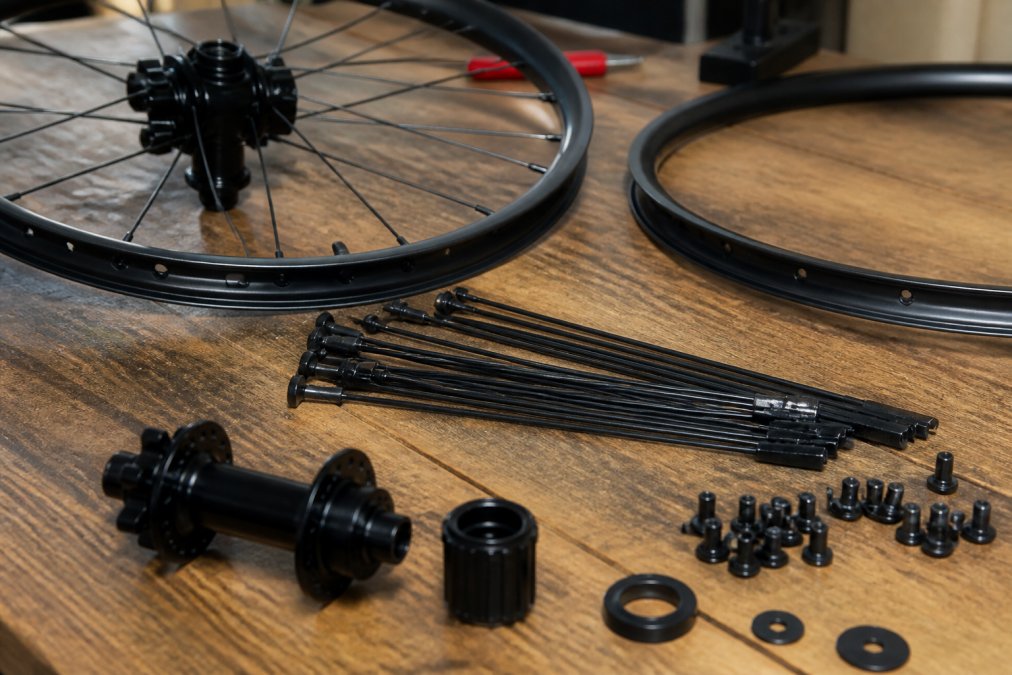
A Berd spoke weighs roughly half what a comparable steel spoke weighs, yet exhibits superior fatigue life and complete imperviousness to corrosion. Dyneema floats on water and resists rust entirely, meaning a set of Berd-spoked wheels requires almost no maintenance compared to steel alternatives that demand regular re-tensioning and inspection.
The real question is whether are Berd spokes worth it for your specific riding style, budget, and performance demands.
Berd Spoke Weight Savings: The Numbers
A complete Berd-spoked wheelset typically weighs 150-200 grams less than an equivalent steel-spoked build. On a 7-kilogram road bike, shaving 200 grams represents a 2.8% reduction in total bike weight. The weight savings matter most where it affects performance: rotational mass. A gram of spoke weight is unsprung weight that must be accelerated from rest with every pedal stroke. The STOXbyHand Berd Spoked Asymmetric 46 Gravel Wheelset at 1260 grams demonstrates this principle, with polymer spokes stripping mass from the wheel's outer edge, where it has the greatest rotational impact.

However, the practical effect varies dramatically by rider. A 65-kilogram climber tackling steep terrain will feel 200 grams of weight savings more acutely than a 95-kilogram sprinter on flat terrain.
A wheelset under 1200 grams can feel "slow" on flat terrain because it requires more effort to maintain speed once accelerated. Berd-spoked wheels, typically in the 1190-1260 gram range, sit in a sweet spot: light enough to feel responsive on climbs, heavy enough to maintain momentum on rolling terrain.
| Wheelset Type | Typical Weight | Best For | Weight Savings vs. Steel |
|---|---|---|---|
| Steel spokes (traditional) | 1450-1550g | Durability, budget | Baseline |
| Carbon spokes | 1350-1420g | Stiffness, speed | 100-150g |
| Berd polymer spokes | 1190-1260g | Climbing, vibration control | 200-300g |
| TiFi polymer spokes | 1190g | Comfort, lightweight | 250-350g |
Ride Quality and Vibration Damping
Berd spokes genuinely differentiate themselves through the material's elasticity. Berd spokes damp vibrations approximately 200% more effectively than steel spokes, meaning road buzz, trail chatter, and impact shock are noticeably reduced (peer-reviewed research).
In back-to-back testing with an on-bike 3D accelerometer, wheels with Berd spokes reduced vibrations by measurable amounts across rough surfaces. Your hands hurt less on gravel descents, your lower back takes fewer impacts on potholed roads, and you can maintain higher speeds over technical terrain without losing grip or confidence.
This vibration damping comes from the spoke's inherent compliance, its capacity to deform slightly under load without permanently bending. Steel spokes are stiff and transmit vibration directly to the rim and hub. Berd spokes flex enough to absorb energy, then return to shape, dissipating that energy as heat rather than transferring it to your body.
For gravel racers covering 50+ miles on rough terrain, this difference is material. You'll experience less fatigue in your hands, wrists, and shoulders. For road cyclists on smooth pavement, the benefit is minimal. For mountain bikers, the compliance helps with technical descents by allowing the wheel to "give" slightly when hitting rocks or roots, then snap back into shape.
The trade-off: this compliance means slightly less lateral stiffness than carbon spokes. Under hard cornering or sprinting, a carbon-spoked wheel will feel fractionally more responsive. For most riders, the comfort gain outweighs this small stiffness penalty.
Berd Spoke Durability Test Results and Real-World Performance
Berd spokes don't fatigue like steel. Steel spokes eventually crack from repeated stress cycles, typically after 3-5 years of hard use (peer-reviewed research). Berd spokes, made from Dyneema, exhibit no known fatigue limit in practical cycling conditions. They don't rust, don't corrode, and don't require re-tensioning cycles that steel demands.
The real durability question isn't whether the spokes fail, they won't. It's whether the rim, hub, and spoke-to-hub interface hold up under the stresses Berd allows. Because Berd spokes can safely handle tension loads up to 100 kilogram-force (compared to 120 kgf for steel), builders must engineer the rest of the wheelset accordingly.
STOXbyHand's Berd-spoked builds use Berd-approved hubs and asymmetric rim profiles specifically designed to balance spoke tension between drive and non-drive sides. This engineering prevents the 40% tension differential that occurs on traditional symmetric rear wheels, extending the life of the entire system.
Real-world durability depends on impact resistance, maintenance, and environmental exposure. Berd spokes excel at two of three: they're impervious to moisture and corrosion, requiring minimal maintenance. But impact resistance depends on rim quality and build precision. A poorly built Berd-spoked wheel can fail catastrophically if the rim cracks, just like any other wheelset.
The durability advantage is real but not infinite. You're not buying a "forever wheel." You're buying a wheel that won't fail due to spoke fatigue or corrosion, but can still be damaged by impact or manufacturing defects.
How to Choose Carbon Fiber Spokes for Mountain Bikes
The choice between Berd, TiFi polymer, and carbon spokes depends on your specific use case. Each material prioritizes different performance characteristics.
Carbon spokes are the stiffest option, excelling at power transfer and lateral rigidity. They're ideal for riders who prioritize acceleration and sprinting. The STOXbyHand Carbon Spoked 5031 (1281 grams) delivers exceptional responsiveness for competitive road racing or gravel events. The trade-off is zero vibration damping and a harsher ride on rough terrain.
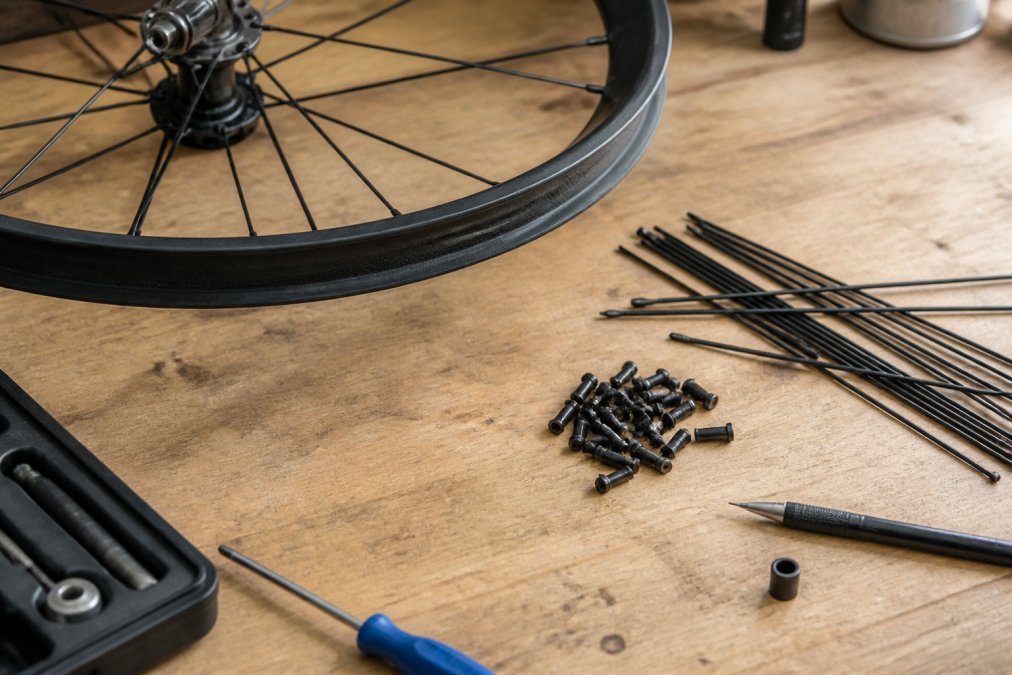
Berd polymer spokes are the middle ground, providing solid stiffness while adding meaningful vibration damping and weight savings. They're the best choice for gravel racers, endurance riders, and mountain bikers who value comfort without sacrificing performance. The STOXbyHand Berd Spoked Asymmetric 46 Gravel Wheelset represents this balance: 1260 grams, excellent compliance, and proven durability.
TiFi polymer spokes are the lightest option at 2.2 grams per spoke, combining titanium ends with aramid fiber for compliance. They offer 52% more elasticity than steel and deliver the most comfortable ride. They're ideal for riders under 90 kilograms prioritizing comfort and lightweight climbing. The STOXbyHand TiFi Polymer Spoked Gravel 45 at 1190 grams is the choice for weight-conscious riders on smooth-to-moderate terrain.

Your decision framework:
- If you weigh under 85kg and prioritize comfort: TiFi polymer
- If you weigh 85-100kg and want balance: Berd polymer
- If you weigh over 100kg or prioritize stiffness: Carbon spokes
- If you're racing road events and pushing maximum power: Carbon spokes
- If you're doing gravel or mountain events over 50 miles: Berd or TiFi polymer
Maximum system weight limits are critical. Berd spokes max out at 110 kilograms total system weight (rider plus bike). TiFi spokes typically handle 105 kilograms. Carbon spokes support heavier riders.
Cost Analysis: Are Berd Spokes Worth the Investment?
A complete Berd-spoked wheelset from STOXbyHand starts at $2,950.00. A comparable carbon-spoked wheelset costs $2,600.00. That's a $350 premium for Berd, or roughly 13% more expensive.
What do you get for that premium? Weight savings of 100-150 grams, superior vibration damping, and zero corrosion maintenance. Over the lifetime of the wheelset (typically 3-5 years of regular use), you'll never re-tension the spokes, never inspect for rust, and never deal with corrosion-related failures.
For a competitive road racer doing 100-kilometre events where every gram matters and your wheelset will be replaced annually, Berd spokes don't make financial sense. Carbon spokes are sufficient.
For a gravel racer doing multi-day events on rough terrain, the calculation changes. The vibration damping reduces fatigue. The zero-maintenance requirement means you can store the wheels without worry. The durability means they'll outlast cheaper alternatives. Over 5 years, the cost-per-ride drops significantly.
For a casual rider with a $3,000 bike, a $2,950 wheelset is disproportionate. For a serious enthusiast with a $6,000+ bike, the wheelset cost becomes acceptable within the overall build budget.
Maintenance and Tensioning Requirements
Steel-spoked wheels demand regular maintenance. Spoke tension drifts over time as the spoke stretches and the rim settles. Every 500-1000 kilometres, you should check spoke tension and re-true the wheel.
Berd spokes eliminate this maintenance cycle. The material doesn't creep or stretch. After the initial build process, the wheel maintains its geometry indefinitely. You'll never need to re-tension a Berd-spoked wheel unless it's been damaged.
Over the lifetime of a wheelset, you save 10-20 hours of maintenance time. For riders who don't have the skills or tools to true wheels, this is invaluable.
The build process itself is more labour-intensive. Hand-building a Berd-spoked wheel takes longer because the lower maximum tension requires more precise engineering. STOXbyHand's 3-week lead time reflects this complexity. The asymmetric rim profile, Berd-approved hubs, and careful tensioning add cost but ensure the wheel performs as designed.
If something does go wrong, a spoke breaks, the rim cracks, or the hub fails, repair costs are higher. However, the likelihood of needing a replacement is lower. Over 5 years, you'll likely spend less on maintenance and repairs despite higher initial cost.
Conclusion
Are Berd spokes worth it? The answer depends on three factors: your total bike weight, your body weight, and how many kilometres you'll ride over the next 5 years.
For riders under 90 kilograms doing 5,000+ kilometres annually on gravel or mountain terrain, Berd spokes deliver measurable comfort, durability, and weight savings that justify the $350 premium over carbon spokes. The vibration damping is genuine, the maintenance savings are real, and the durability is unmatched.
For heavier riders, road racers replacing wheelsets annually, or casual riders covering under 2,000 kilometres per year, carbon spokes offer 95% of the performance at lower cost.
STOXbyHand's hand-built Berd-spoked wheelsets, including the Berd Spoked Asymmetric 46 Gravel Wheelset at $2,950.00, represent some of the best value in advanced spoke technology available. Each wheel is built to 0.1mm trueness with uniform spoke tension, engineered specifically for Berd's material properties, and backed by over 12 years of precision wheelbuilding experience. If you're serious about performance and willing to invest in a wheelset that will outlast your bike frame, Berd spokes are worth every dollar.
Frequently Asked Questions
How much weight can Berd spokes save on a wheelset?
Berd polymer spokes typically save 150-200 grams per wheelset compared to steel spokes, reducing rotational mass without sacrificing strength or stiffness. The Berd Spoked Asymmetric 46 Gravel Wheelset, for example, weighs just 1,260 grams. This weight reduction improves acceleration and climbing performance, particularly noticeable on longer climbs where unsprung weight matters most.
Are Berd spokes durable enough for enduro mountain biking?
Berd spokes are made from Dyneema (ultra-high molecular weight polyethylene), which has 15 times the strength-to-weight ratio of steel and improved fatigue life. They resist corrosion and environmental damage. However, maximum spoke tension is 100 kgf versus 120 kgf for steel, so they require careful build and tensioning. For aggressive enduro riding, consult with a wheel builder about system weight limits and spoke count to ensure durability under impact.
What makes Berd spokes worth the extra cost compared to carbon?
Berd spokes offer superior vibration damping (200% better than metal spokes) and improved compliance, resulting in a smoother, more comfortable ride. They're also lighter and more corrosion-resistant than carbon. At $2,950 for a hand-built wheelset, they deliver performance benefits. The value depends on whether ride comfort and durability justify the premium for your riding style.
Do Berd spokes require special maintenance or wheel truing?
Berd spokes require the same tensioning and truing process as any spoke, but at lower maximum tension (100 kgf). After purchase, standard maintenance applies: periodic spoke tension checks and truing as needed. Avoid over-tensioning, and have a skilled wheel builder service them if damage occurs.
This article was written using GrandRanker