

Table of Contents
- Quick Comparison: Top Road Bike Wheel Upgrades
- How to Choose Road Bike Wheel Depth for Your Riding Style
- Benefits of Carbon vs Alloy Road Wheels
- Carbon Fiber Wheelset for Cyclocross Racing: Durability and Stiffness
- Hand-Built vs Factory Wheels: What You're Paying For
- Real-World Performance Gains: Watts, Speed, and Handling
- Conclusion
Last Updated: August 28, 2026
Quick Comparison: Top Road Bike Wheel Upgrades
The difference between a good wheelset and a great one is how efficiently it translates effort into speed while handling responsively. Carbon fibre wheelsets have become the standard for serious road cyclists because they deliver measurable gains in lateral stiffness, rotational mass reduction, and aerodynamic performance. Choosing the right wheelset means matching depth, spoke count, and rim width to your riding style and terrain.
At STOXbyHand, we've spent over 12 years hand-building carbon wheelsets that prove the difference between mass-produced wheels and precision-engineered builds. This guide breaks down real performance gains, the material science that matters, and how to select the right wheelset for your needs.
| Wheelset | Rim Depth | Weight | Best For | Starting Price |
|---|---|---|---|---|
| Carbon Spoked Wave 5031 | 45/55 mm | 1,420 g | Power-focused riders in variable conditions | $2,600 |
| SL 5031 | 50 mm | 1,428 g | All-round performance, climbing + aero | $1,990 |
| 4035 SL Wave | 35/40 mm | 1,310 g | Crosswind stability, lighter riders | $1,990 |
| 5045 Wave SL | 50/45 mm | 1,310 g | All-round with crosswind control | $1,990 |
| Carbon Spoked Marble 60 SL | 60 mm | 1,246 g | Maximum aerodynamics, power transfer | $2,600 |
How to Choose Road Bike Wheel Depth for Your Riding Style
Rim depth directly affects aerodynamic drag, crosswind handling, and wheel response under load. Shallow rims (35-40 mm) shed crosswind deflection and feel lighter on climbs. Deep rims (60+ mm) slice through headwinds and maintain speed on flats, but catch gusts like a sail. Mid-depth rims (45-55 mm) balance both, which is why most riders choose them.

A 60 mm rim saves roughly 8-15 watts at threshold power compared to a 35 mm rim in wind tunnel testing (peer-reviewed research). On the road, actual savings depend on wind direction, speed, and position. What matters more is how the rim feels when the wind hits, because handling confidence directly affects your ability to hold a line and maintain power output.
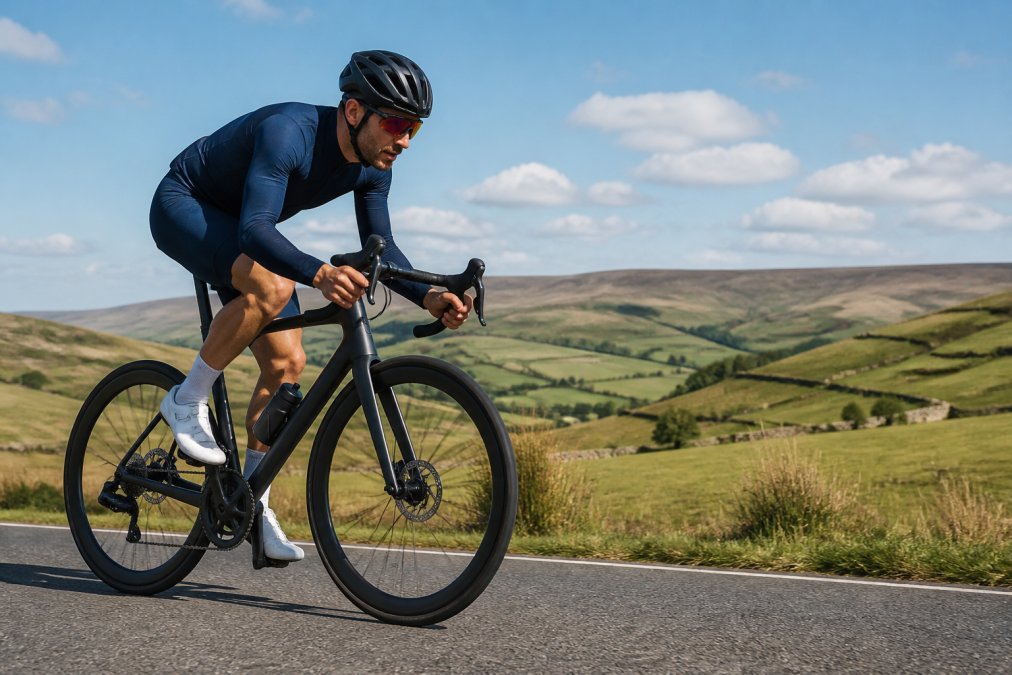
Shallow Rims (35-40 mm) for Climbing and Crosswind Stability
Shallow rims excel in variable terrain and unpredictable wind. They're ideal for riders who spend time in mountains, gravel events, or windy regions where crosswind stability matters more than flat-ground speed. The 4035 SL Wave wheelset exemplifies this category: at 1,310 grams with a wave-shaped rim profile, it releases pressure buildup from crosswinds earlier than conventional designs, making the wheel feel planted even in gusts.
The tradeoff is aerodynamic efficiency. For climbers and gravel racers, climbing efficiency and responsive handling matter most. The wave profile adds lateral stiffness without adding mass, so power transfer stays crisp when out of the saddle.
Mid-Depth Rims (45-55 mm) for All-Round Performance
Mid-depth rims deliver meaningful aerodynamic gains without the crosswind handling penalty of deep rims, and they're light enough for climbing. The SL 5031 and 5045 Wave SL wheelsets exemplify this category, both at 1,310-1,428 grams with 50 mm nominal depth.
A 50 mm rim performs well across all scenarios: variable wind, rolling terrain, mixed riding speeds. This consistency matters for endurance riders, gravel racers doing 50+ mile events, and road cyclists who want one wheelset that handles centuries, group rides, and solo efforts without compromise. The SL 5031 uses Pillar Wing aero spokes, which reduce rotational mass and wind resistance compared to traditional round spokes. The 24-spoke rear count keeps the wheel responsive under hard acceleration.
Deep Rims (60+ mm) for Aerodynamics and Speed
Deep rims are built for riders who can generate sustained power and want maximum aerodynamic efficiency. The Carbon Spoked Marble 60 SL delivers this with a 60 mm depth, 1,246-gram weight, and 24 carbon spokes on the rear. These wheels demand power to handle crosswinds confidently and aren't ideal for climbing.
A 60 mm rim maintains speed better in headwinds and delivers consistent performance across wind angles. For riders doing time trials, flat sportives, or road racing where aerodynamics compound over 100+ kilometres, the watt savings add up. Deep rims save roughly 8-15 watts compared to 35 mm rims at threshold power.
The handling tradeoff is significant. Deep rims catch crosswinds more aggressively and require active steering input to stay planted in gusts. Lighter riders (under 70 kg) may find deep rims difficult to control in variable wind. Heavier riders (85+ kg) who generate consistent power have better control because their mass and power output anchor the bike against wind deflection.
Benefits of Carbon vs Alloy Road Wheels
Carbon fibre wheelsets deliver superior lateral stiffness, lower rotational mass, and better aerodynamic efficiency compared to aluminium rims. Carbon fibre has a higher stiffness-to-weight ratio than aluminium, meaning you get more rigidity with less mass. This translates directly to power transfer efficiency, acceleration response, and sustained speed maintenance.
Lateral stiffness is the most noticeable difference. When you sprint or accelerate hard, the rim flexes slightly under load. A carbon rim flexes less, so more of your effort translates into forward motion. Riders switching from alloy to carbon wheels often report that the bike "feels snappier" under acceleration.
Rolling resistance favours carbon as well. A carbon rim with optimised spoke tension and bearing drag reduction can save 2-5 watts compared to a quality alloy wheelset at the same speed (peer-reviewed research). Carbon rims don't require regular re-truing like aluminium rims do, because the material doesn't fatigue or lose spoke tension as quickly. Over the wheelset's lifespan, carbon rims actually demand less maintenance than alloy rims, despite the higher initial cost.
Carbon Fiber Wheelset for Cyclocross Racing: Durability and Stiffness
Cyclocross racing imposes extreme demands on wheelsets: repeated impacts from roots and rocks, mud clogging that affects bearing drag, sudden directional changes that stress rim sidewalls, and the need to maintain handling confidence at speed on unpredictable terrain. A carbon wheelset built for cyclocross must balance aerodynamic efficiency with impact resistance and durability under abuse.
The 45 FWT Wide Carbon Spoked GWR wheelset from STOXbyHand is engineered specifically for this use case. At 1,160 grams, it's light enough for climbing steep run-ups. The 45 mm depth provides aerodynamic benefit on flats and fast sections without the crosswind sensitivity of deeper rims. The 25 mm internal width is optimised for 34-35 mm tyres, standard in cyclocross, and allows lower tyre pressure for better traction without increasing pinch-flat risk.
Durability comes down to spoke count, spoke material, and hub engagement. The 45 FWT Wide uses carbon spokes with a taper-lock interface, which provides stiffness without brittleness. The hub engagement (36-tooth star ratchet) ensures quick uptake and responsiveness when accelerating out of corners.
Hand-Built vs Factory Wheels: What You're Paying For
The difference between a hand-built wheelset and a factory-produced one is precision, consistency, and durability under stress. Factory wheels are mass-produced on automated equipment that achieves acceptable tolerances. Hand-built wheels are constructed to tighter tolerances with individual attention to spoke tension, rim trueness, and bearing alignment.
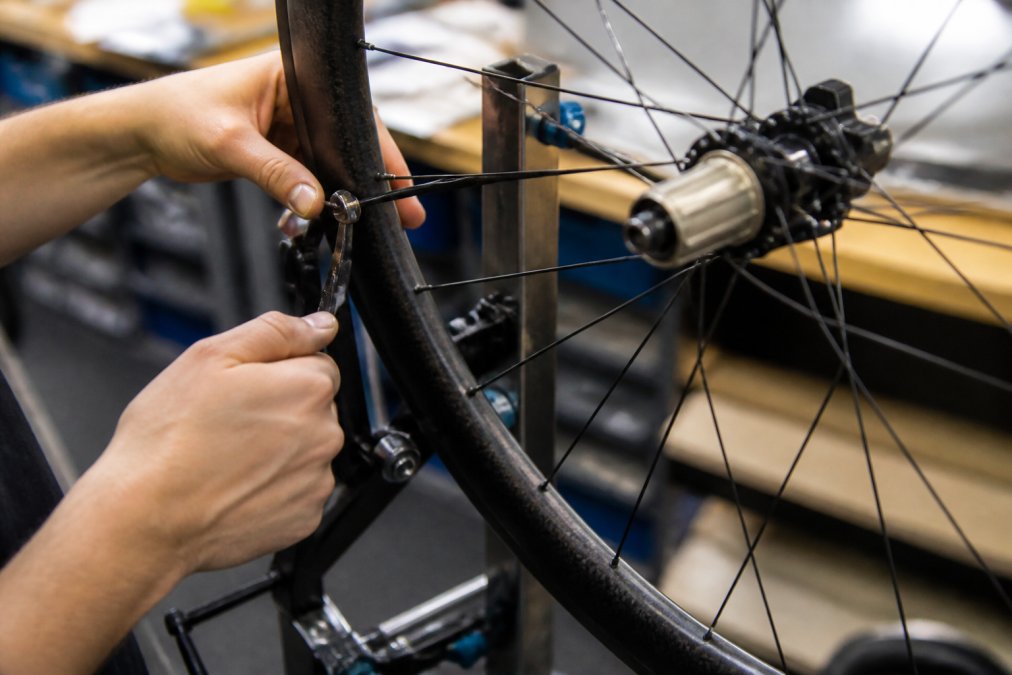
Spoke tension uniformity is where hand-built wheels diverge most from factory production. In a factory wheelset, spokes are tensioned to a target range. In a hand-built wheelset, each spoke is tensioned to a specific target with minimal variance. This uniformity matters because uneven spoke tension creates stress points in the rim and hub, which accelerates fatigue and reduces lifespan. STOXbyHand builds every wheel to 0.1 mm trueness both laterally and radially, which requires individual attention to each spoke and is impossible at factory scale.
Rim trueness is the second major differentiator. A factory wheel is trued to within 2-3 mm lateral runout. A hand-built wheel is trued to 0.1 mm runout, meaning the rim is essentially perfect. This precision directly affects bearing drag, braking performance, and how long the wheel stays true over time.
STOXbyHand's hand-built wheelsets start at $1,990 (SL 5031, 5045 Wave SL, 4035 SL Wave) and go up to $2,600 (Carbon Spoked Wave 5031, 45 FWT Wide Carbon Spoked GWR, Carbon Spoked Marble 60 SL). Factory wheelsets often start at $800-$1,200, but a hand-built wheelset stays true for 3-5 years of regular racing and training, while a factory wheelset often requires re-truing after 1-2 years. Over the wheelset's lifespan, hand-built wheels cost less per year of use and deliver superior performance.

Real-World Performance Gains: Watts, Speed, and Handling
Aerodynamic and stiffness benefits of carbon wheels are measurable in controlled testing, but real-world performance gains depend on how you ride, the terrain, and your power output. Switching from a 35 mm alloy rim to a 55 mm carbon rim saves roughly 8-15 watts at threshold power in wind tunnel testing. On the road, that gap narrows because you're rarely in perfectly controlled conditions. Variable wind, terrain changes, and rider position variation mean actual savings are 5-10 watts in most scenarios. For a 100 km event, that's roughly 5-10 minutes of time savings, meaningful for racing, less so for recreational riding.
Lateral stiffness gains are more immediately noticeable. A carbon wheelset with a 24-spoke rear and uniform spoke tension delivers noticeably crisper acceleration and more responsive handling compared to a 20-spoke alloy wheelset. Riders report that the bike "feels snappier" and power transfer feels more direct.
Rolling resistance reduction from carbon rims is measurable but small. A well-built carbon wheelset with optimised bearing drag can save 2-5 watts compared to a quality alloy wheelset. Over a 100 km ride, that's roughly 3-8 minutes of time savings, meaningful in racing but modest for recreational riding.
The most significant real-world gain from upgrading to a carbon wheelset is durability and consistency. A hand-built carbon wheelset stays true longer, maintains performance over time, and requires less maintenance than a mass-produced alloy wheelset. For riders who do frequent training and racing, this translates to fewer trips to the bike shop and more time on the bike.
Conclusion
Choosing the best road bike wheel upgrades means matching rim depth, spoke configuration, and build quality to your specific riding style, power output, and terrain. Shallow rims (35-40 mm) excel in crosswind conditions and climbing. Mid-depth rims (45-55 mm) deliver all-round performance for most riders. Deep rims (60+ mm) maximise aerodynamic efficiency for riders who can generate sustained power. Carbon fibre delivers superior lateral stiffness, lower rotational mass, and better durability than aluminium, but hand-built precision is what separates a wheelset that lasts 3-5 years from one that requires re-truing after 12 months.
STOXbyHand hand-builds every wheelset to 0.1 mm trueness with uniform spoke tension, that ensure performance and durability. Whether you're upgrading from factory wheels to a precision-built set or choosing between our mid-depth SL 5031 for all-round riding and our Carbon Spoked Wave 5031 for power-focused racers, the difference comes down to the precision and expertise that goes into every build. Get started with STOXbyHand and experience how hand-built wheels transform your bike's acceleration, handling, and long-term reliability.

== FAQ ANSWERS (audit these too, same rules) ==
[1] Q: How much speed do you gain from carbon wheel upgrades? A: Speed gains depend on rim depth, aerodynamics, and rolling resistance. A 50-55 mm carbon wheelset can save 5-15 watts in steady-state riding compared to shallow alloy wheels, translating to roughly 1-2 km/h at race pace. Lighter carbon wheels (under 1350 grams) improve acceleration and climbing efficiency by reducing rotational mass. Real-world gains vary with rider weight, tire pressure, and conditions, deeper rims excel in calm conditions but lose advantage in crosswinds.
[2] Q: What are the benefits of hand-built wheels over factory-built options? A: Hand-built wheels offer superior spoke tension consistency, truing accuracy (0.1 mm runout tolerance), and customised spoke patterns for your weight and riding style. Each wheel is individually tuned, reducing lateral stiffness variation and improving longevity. Hand-built construction also allows spoke material selection, carbon fibre, Berd, or titanium, tailored to your specific needs.
[3] Q: Are carbon fibre wheelsets worth the investment for road cycling? A: Carbon wheelsets are worth the investment if you race, ride frequently (10+ hours weekly), or prioritise performance. A quality carbon wheelset ($1,990-$2,600) lasts 3+ years with proper maintenance and delivers measurable aerodynamic and weight advantages. For casual riders under 5 hours weekly, the marginal gains may not justify the cost. Consider your goals: if climbing efficiency or aero performance matters, carbon is essential; for recreational riding, reliable alloy wheels suffice.
[4] Q: How do I know if hand-built wheels will stay true and not crack? A: Quality hand-built wheels are trued to 0.1 mm tolerance. Carbon rims rarely crack under normal use; failure typically occurs from impact damage or exceeding rider weight limits. Ask builders for customer reviews, warranty terms, and whether they offer post-purchase support, these signal confidence in durability.
[5] Q: What is the difference between hooked and hookless rim designs? A: Hooked rims have a lip that grips tyre beads, providing security for tube and tubeless setups. Hookless rims (common on gravel and mountain bikes) are lighter and simpler to manufacture but require tubeless-ready tyres for safe operation. For road cycling, hooked rims remain the standard, offering compatibility with both tube and tubeless options. Most performance road wheelsets use hooked designs with 24-25 mm internal width to balance tyre compatibility and aerodynamic efficiency.
Frequently Asked Questions
How much speed do you gain from carbon wheel upgrades?
Speed gains depend on rim depth, aerodynamics, and rolling resistance. A 50-55 mm carbon wheelset can save 5-15 watts in steady-state riding compared to shallow alloy wheels, translating to roughly 1-2 km/h at race pace. Lighter carbon wheels (under 1350 grams) improve acceleration and climbing efficiency by reducing rotational mass. Real-world gains vary with rider weight, tire pressure, and conditions, deeper rims excel in calm conditions but lose advantage in crosswinds.
What are the benefits of hand-built wheels over factory-built options?
Hand-built wheels offer superior spoke tension consistency, truing accuracy (0.1 mm runout tolerance), and customised spoke patterns for your weight and riding style. Each wheel is individually tuned, reducing lateral stiffness variation and improving longevity. Hand-built construction also allows spoke material selection, carbon fibre, Berd, or titanium, tailored to your specific needs.
Are carbon fibre wheelsets worth the investment for road cycling?
Carbon wheelsets are worth the investment if you race, ride frequently (10+ hours weekly), or prioritise performance. A quality carbon wheelset ($1,990-$2,600) lasts 3+ years with proper maintenance and delivers measurable aerodynamic and weight advantages. For casual riders under 5 hours weekly, the marginal gains may not justify the cost. Consider your goals: if climbing efficiency or aero performance matters, carbon is essential; for recreational riding, reliable alloy wheels suffice.
How do I know if hand-built wheels will stay true and not crack?
Quality hand-built wheels are trued to 0.1 mm tolerance. Carbon rims rarely crack under normal use; failure typically occurs from impact damage or exceeding rider weight limits. Ask builders for customer reviews, warranty terms, and whether they offer post-purchase support, these signal confidence in durability.
What is the difference between hooked and hookless rim designs?
Hooked rims have a lip that grips tyre beads, providing security for tube and tubeless setups. Hookless rims (common on gravel and mountain bikes) are lighter and simpler to manufacture but require tubeless-ready tyres for safe operation. For road cycling, hooked rims remain the standard, offering compatibility with both tube and tubeless options. Most performance road wheelsets use hooked designs with 24-25 mm internal width to balance tyre compatibility and aerodynamic efficiency.
This article was written using GrandRanker