

Table of Contents
- What to Look for in a Durable Carbon Gravel Wheelset for Racing
- Carbon vs Alloy Gravel Wheels: Which Wins on Race Day?
-
STOXbyHand Carbon Gravel Wheelset Comparison
- 45 FWT Wide Carbon Spoked GWR, Best All-Road Aero Pick ($2,600)
- Berd Spoked Asymmetric 46, Best for Vibration Damping and Comfort ($2,950)
- TiFi Polymer Spoked Gravel 45, Best Spoke Technology for Endurance Racing ($2,990)
- TiFi Polymer Spoked Gravel Max, Best for Aerodynamic Discipline Racing ($3,290)
- Core Gravel 35 Wheelset, Best Entry Point into Hand-Built Carbon
- Tubeless Gravel Setup for Racing: What You Need to Know
- Repairability, Warranty Coverage and Crash Replacement Policies
- Why Custom Hand-Built Gravel Wheels Outperform Factory Builds
- Which Carbon Gravel Wheelset Should You Choose?
- Conclusion
Last Updated: August 26, 2026
Choosing the wrong wheelset for a gravel race doesn't just cost you time, it can end your day entirely. At STOXbyHand, we've spent over 12 years hand-building carbon gravel wheelsets for riders who can't afford that outcome. This guide breaks down what separates a genuinely durable carbon gravel wheelset for racing from one that fails when terrain gets rough, covering rim geometry, spoke technology, tubeless setup, repairability, and our full range.
Quick Picks:
- Best All-Road Aero: 45 FWT Wide Carbon Spoked GWR, wide rim, aero profile, 1160g
- Best for Vibration Damping: Berd Spoked Asymmetric 46, Dyneema polymer spokes, asymmetric rim
- Best Spoke Tech for Endurance: TiFi Polymer Spoked Gravel 45, world's lightest spoke, 52% more elasticity than steel
- Best Aero Discipline Racing: TiFi Polymer Spoked Gravel Max, 54mm front depth, purpose-built aero profile
- Best Entry Point: Core Gravel 35, same rim quality, round spokes, accessible price
What to Look for in a Durable Carbon Gravel Wheelset for Racing
A durable carbon gravel wheelset delivers consistent lateral stiffness, appropriate radial compliance, and reliable hub engagement across mixed terrain.

Rim Depth, Internal Width and Aerodynamic Profile
Rim depth controls aerodynamic profile and crosswind stability. Deeper rims (45mm+) provide genuine aero benefit on open gravel roads; shallower rims (35mm) offer better crosswind stability on technical terrain.
Internal rim width is arguably more important for gravel racing than depth. A wider internal width (25-32mm) allows larger tyres at lower pressures without ballooning beyond the rim's leading edge, creating smooth airflow and reducing rolling resistance. According to Cycling Australia's technical resources for competitive cyclists, tyre and rim compatibility directly affects handling in sanctioned events.
Hookless rim design improves impact resistance by removing the bead hook that can crack under sharp impacts, and allows better pressure optimisation at lower pressures.
Hub Engagement, Bearing Drag and Power Transfer
A 36-tooth star ratchet system delivers fast engagement with minimal dead band between pedal strokes, critical on technical gravel where you're accelerating repeatedly out of corners. Ceramic bearings reduce friction compared to steel, particularly at higher cadences typical in gravel racing. Thru-axle compatibility is now standard for disc brake gravel builds, improving power transfer and eliminating flex that occurs with quick-release axles under hard efforts.
Carbon vs Alloy Gravel Wheels: Which Wins on Race Day?
Carbon wins on race day; alloy wins on the repair stand.
Carbon fibre provides lower rotational weight for the same rim depth, better vibration damping, and stiffer rim profile without adding mass. For gravel racing, vibration damping reduces fatigue over long events, a decisive factor in 50+ kilometre races. Alloy rims are more repairable after significant impact, though modern filament-wound carbon has closed that gap considerably. The weight penalty of alloy is real: for climbing-heavy courses, rotational weight difference translates into measurable effort over repeated ascents.
CyclingTips technical analysis of carbon vs alloy rim performance
STOXbyHand Carbon Gravel Wheelset Comparison
The STOXbyHand gravel range covers five distinct builds, each optimised for a specific racing discipline. Every wheelset is hand-built to 0.1mm trueness with uniform spoke tensions that factory builds cannot replicate at scale.
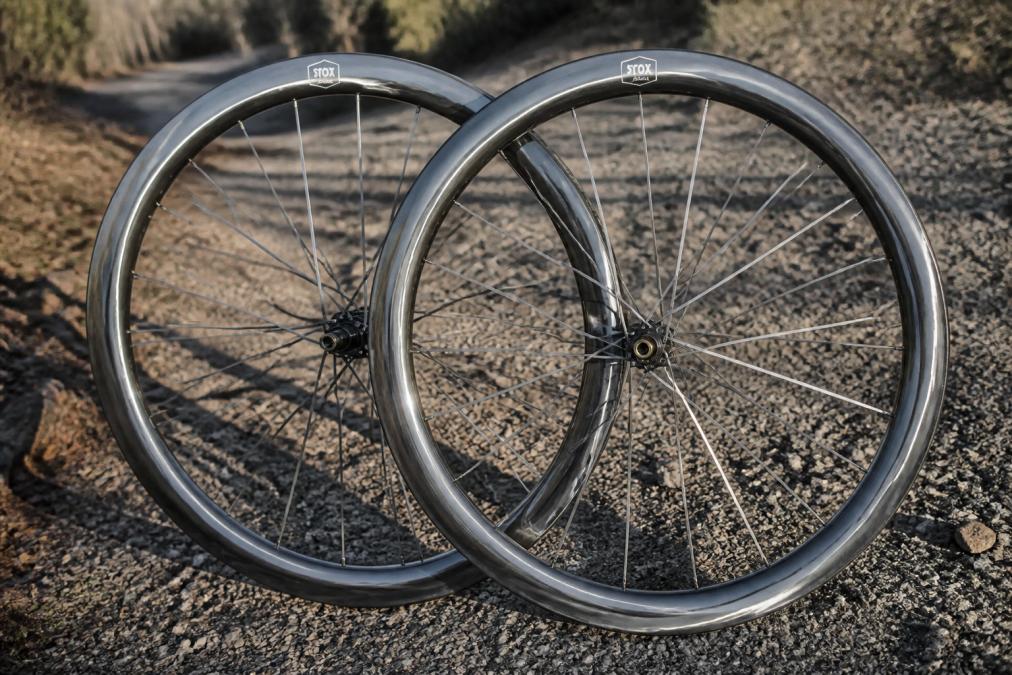
| Wheelset | Weight | Rim Depth | Internal Width | Spoke Type | Price |
|---|---|---|---|---|---|
| 45 FWT Wide Carbon Spoked GWR | 1160g | 45mm | 25mm (hooked) | Carbon | $2,600 |
| Berd Spoked Asymmetric 46 | 1260g | 46mm | 30mm (hookless) | Berd Dyneema | $2,950 |
| TiFi Polymer Spoked Gravel 45 | 1190g | 45mm | 32mm (hooked) | TiFi Aramid | $2,990 |
| TiFi Polymer Spoked Gravel Max | 1190g | 54mm front / 50mm rear | 30mm | TiFi Aramid | $3,290 |
| Core Gravel 35 | 1440g | 35mm | 26mm (hookless) | Round steel | Contact for pricing |
45 FWT Wide Carbon Spoked GWR, Best All-Road Aero Pick ($2,600)
The 45 FWT is the most versatile wheelset in the gravel range, ideal for riders wanting a single build that handles both fast gravel events and mixed road-gravel routes. The 25mm internal hooked rim width allows a 34-35mm tyre to sit slightly narrower than the rim's leading edge, creating smooth airflow that reduces drag without requiring a deep-section rim. At 1160 grams, it's the lightest build in the range. The 36-tooth star ratchet hub provides fast engagement; ceramic bearings reduce drag across the full speed range. Rider weight limit is 110kg.

Best for: All-road gravel racing, mixed terrain events, riders prioritising the lightest possible build.
Pros: Lightest wheelset at 1160g; true aero wide rim geometry for 34mm-plus tyres; filament wound manufacturing for consistent rim quality; crash replacement at 60% RRP.
Cons: 25mm internal width limits tyre volume at very low pressures; carbon spokes require careful handling.
Berd Spoked Asymmetric 46, Best for Vibration Damping and Comfort ($2,950)
The Berd Spoked Asymmetric 46 prioritises vibration damping. Berd spokes are made from Dyneema, an ultra-high molecular weight polyethylene with 15 times the strength-to-weight ratio of steel. The critical performance characteristic is vibration damping: Berd spokes provide significantly better damping than metal spokes, reducing fatigue over long events. The asymmetric rim profile addresses spoke tension imbalances on disc brake rear wheels. Maximum system weight is 110kg. Lead time is approximately three weeks.
Best for: Endurance gravel events, rough terrain, riders wanting comfort without sacrificing speed.
Pros: Dyneema spokes provide superior vibration damping; asymmetric rim profile balances spoke tensions on disc rear wheels; hookless 30mm internal width suits wide tyre setups; impervious to corrosion.
Cons: Maximum spoke tension of 100kgf (lower than steel's 120kgf) requires precise tensioning; three-week lead time; heavier than TiFi and 45 FWT builds.
TiFi Polymer Spoked Gravel 45, Best Spoke Technology for Endurance Racing ($2,990)
The TiFi spoke combines 6Al-4V titanium end fittings with an aramid fibre body made from over 20,000 individual strands. At 2.2 grams per spoke, it's the world's lightest spoke with 52% more elasticity than steel and 110% more than carbon. In accelerometer testing, TiFi spokes reduced vibrations by around 15% compared to steel and 29% compared to carbon. For endurance gravel racing over 50 kilometres on mixed terrain, that vibration reduction compounds across hours of riding.
The Gravel 45 runs a 32mm internal hooked rim width (the widest in the range) paired with a 45mm depth. Wheelset weight is 1190g with a maximum system weight of 105kg.
Best for: Long-distance endurance gravel events, technically demanding terrain, riders prioritising comfort and fatigue management.
Pros: World's lightest spoke at 2.2g each; 52% more elasticity than steel for superior radial compliance; 32mm internal width, widest in the range; 29% vibration reduction versus carbon spokes.
Cons: Maximum system weight of 105kg is lower than other builds; premium price point.
TiFi Polymer Spoked Gravel Max, Best for Aerodynamic Discipline Racing ($3,290)
The TiFi Polymer Spoked Gravel Max is built for speed-focused gravel racing where aerodynamic efficiency is primary. The front rim runs 54mm deep and 44mm wide; the rear runs 50mm deep and 37mm wide. This asymmetric depth pairing concentrates rim depth where it generates the most aerodynamic benefit. The 30mm internal width accommodates wider tyres while maintaining aerodynamic profile. At 1190g, this is genuinely light given the rim depths.
Best for: Fast, flat-to-rolling gravel racing, aerodynamic discipline events, riders comfortable managing deeper rims in crosswinds.
Pros: 54mm front depth for maximum aerodynamic efficiency; TiFi spoke technology for vibration damping at speed; 1190g, competitive weight for the rim depth.
Cons: 54mm front depth increases crosswind sensitivity; highest price point at $3,290; not ideal for highly technical, low-speed gravel courses.
Core Gravel 35 Wheelset, Best Entry Point into Hand-Built Carbon
The Core Gravel 35 uses the same Toray T700 carbon rim as premium builds (35mm deep, 26mm internal hookless width) with round Pillar PSR TB 2018 triple-butted spokes and STOXbyHand Core straight-pull hubs. Rider weight limit is 120kg, the highest in the range. Available in 650b or 700c, tubeless and hookless ready.
Best for: Riders entering hand-built carbon for the first time, heavier riders needing the 120kg limit, training builds.
Pros: Same rim quality as premium models; 120kg rider weight limit, highest in the range; available in 650b and 700c; tubeless and hookless ready.
Cons: Round spokes rather than bladed, minor aerodynamic penalty; heavier at 1440g.
Tubeless Gravel Setup for Racing: What You Need to Know
Hookless rims require tubeless-ready tyres rated for hookless mounting, a non-negotiable compatibility requirement. Running a clincher tyre on a hookless rim at race pressures is a structural risk. For hooked rims, any tubeless-ready tyre works within the rim's stated pressure range.
Sealant volume for gravel racing should be higher than road setups (60-90ml per tyre depending on tyre volume) because gravel terrain introduces more puncture risk. Refresh sealant every three to four months as it dries out faster in dry conditions.
Tyre pressure optimisation on wider rims is where many riders leave performance behind. A 32mm internal width running a 45mm tyre can operate at significantly lower pressures than the same tyre on a 25mm internal rim, because the wider rim provides more structural support. Lower pressure means better impact resistance, more traction, and lower rolling resistance on rough surfaces. According to Bicycle Network's guide to tyre pressure and rolling resistance, optimising tyre pressure for surface type is one of the most accessible performance gains available.
Repairability, Warranty Coverage and Crash Replacement Policies
The real cost of premium carbon wheels is what happens after a crash. Every STOXbyHand gravel wheelset carries a three-year warranty on manufacturing defects. Crash replacement is available at 40-60% of RRP depending on the model. The 45 FWT Wide Carbon Spoked GWR, for example, offers crash replacement at 60% RRP, so a $2,600 wheelset has a crash replacement cost of around $1,040, not a full repurchase.
Filament-wound construction produces more consistent wall thickness than traditional air-bag moulded rims, reducing internal voids that can propagate into cracks under cyclic loading. Both Berd and TiFi spokes have improved fatigue life over steel and are resistant to environmental degradation that affects metal spokes over time.
Standards Australia's guidelines on bicycle component testing and safety
Why Custom Hand-Built Gravel Wheels Outperform Factory Builds
Factory-built wheels are built to a price point and production schedule. Hand-built wheels are built to a specification. A machine-laced wheel achieves consistent spoke count and approximate tension, but final tensioning is often done to a tolerance prioritising throughput. A hand-built wheel, built to 0.1mm trueness both laterally and radially, has uniform spoke tensions verified by a builder who can feel the difference between right and close enough.
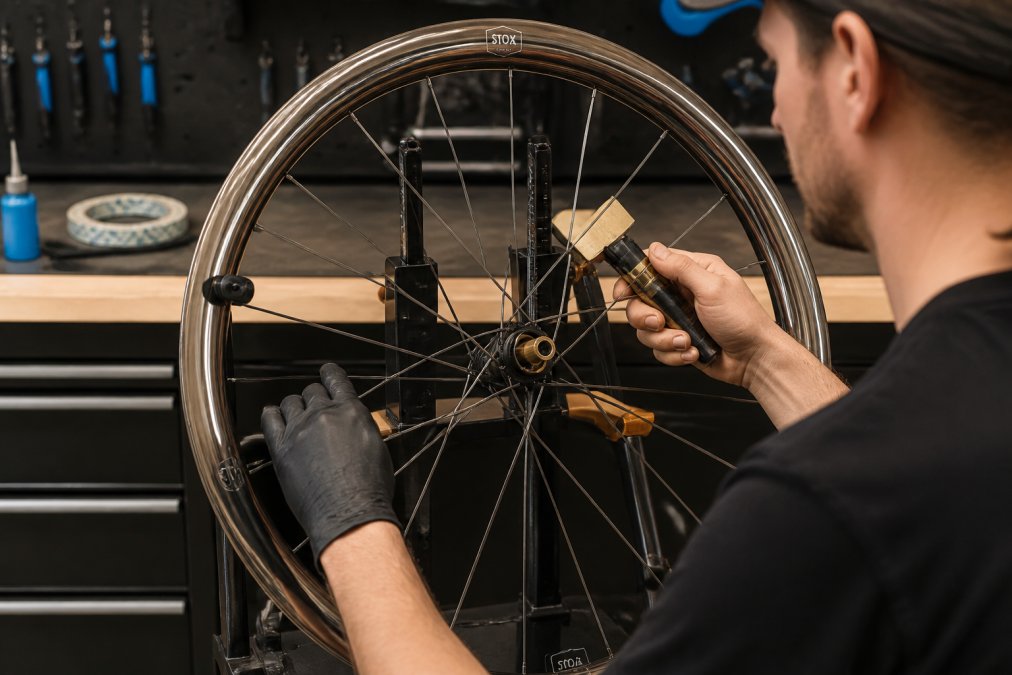
Spoke tension uniformity matters for durability. Uneven tensions create stress concentrations at spoke holes with the highest load, exactly where fatigue cracks initiate. Even tensions distribute load across all spokes, extending fatigue life and maintaining trueness over time. Over 12 years of hand-building wheels, STOXbyHand has consistently produced wheelsets that outlast and outperform factory equivalents at the same price point, not because of exotic materials alone, but because the build process doesn't cut corners on variables that determine long-term durability.
Which Carbon Gravel Wheelset Should You Choose?
The right wheelset depends on your event type, rider weight, and how you weight comfort against aerodynamic efficiency.
For all-road versatility and the lightest possible build: The 45 FWT Wide Carbon Spoked GWR at $2,600.
For endurance events on rough terrain: The Berd Spoked Asymmetric 46 at $2,950 or TiFi Polymer Spoked Gravel 45 at $2,990. Both prioritise vibration damping and radial compliance. The TiFi offers the wider internal rim width at 32mm; the Berd offers the asymmetric rim profile for better spoke tension balance.

For flat-to-rolling fast gravel races: The TiFi Polymer Spoked Gravel Max at $3,290. The 54mm front depth delivers real aerodynamic benefit on courses where you're sustaining speed.
For riders entering hand-built carbon for the first time or needing the highest weight limit: The Core Gravel 35, with a 120kg rider limit and the same rim quality as the premium range.
A common mistake is choosing based on rim depth alone. Internal rim width, spoke technology, and build quality determine how that rim performs and how long it lasts.
Prices shown are in AUD. All STOXbyHand gravel wheelsets are hand-built. Lead times vary by model, contact the team for current availability.
Selecting a durable carbon gravel wheelset for racing requires matching rim geometry, spoke technology, and build quality to your specific discipline. STOXbyHand's hand-built gravel range covers every racing profile, from the all-road versatility of the 45 FWT to the aerodynamic focus of the TiFi Polymer Spoked Gravel Max, with a three-year warranty and crash replacement programme that protects your investment beyond race day. Get started with STOXbyHand and find the right build for your next event.
Frequently Asked Questions
Q: What makes a carbon gravel wheelset durable enough for racing?
A: Durability in a carbon gravel wheelset comes from rim construction method, spoke choice and build precision. Filament wound carbon rims resist impacts better than standard layup designs. Spoke tension uniformity, achieved through hand-building to 0.1mm runout tolerances, prevents stress concentration that causes premature failure. Hub engagement quality and bearing specification also matter on rough terrain, where consistent power transfer and low bearing drag keep the wheel performing over long race distances.
Q: How does spoke choice affect the durability of a gravel wheelset?
A: Spoke material directly affects fatigue life, vibration damping and rotational weight. Steel spokes are reliable but add weight and transmit more road vibration. Carbon spokes increase lateral stiffness and acceleration response but offer limited compliance. Berd polymer spokes, made from Dyneema ultra-high molecular weight polyethylene, provide 200% better vibration damping than steel and have improved fatigue life. TiFi polymer spokes combine titanium ends with aramid fibre, delivering 52% more elasticity than steel and 29% less vibration than carbon spoked wheels in back-to-back testing.
Q: What is the ideal rim depth for a gravel racing wheelset?
A: For most gravel racing, a 45-50mm rim depth balances aerodynamic profile with crosswind stability on variable terrain. Shallower rims below 35mm reduce crosswind sensitivity but sacrifice aerodynamic efficiency at speeds above 30 km/h. Deeper rims above 50mm suit flatter, faster courses where aerodynamic gains outweigh handling trade-offs. Internal rim width of 25-32mm is equally important, as wider internal widths optimise tyre shape, lower rolling resistance and allow correct psi optimisation with 38-50mm gravel tyres.
Q: Are carbon wheels worth it for gravel racing?
A: Carbon gravel wheelsets offer a meaningful performance advantage over alloy for racing. The weight saving on rotational mass directly reduces the energy needed to accelerate, which compounds over a long event. Carbon's stiffness improves power transfer out of corners and on climbs. The lateral stiffness of a carbon rim also maintains tyre geometry under load. For riders doing 80km-plus events on rough terrain, the reduction in vibration fatigue from compliant spoke options like Berd or TiFi is a practical benefit beyond raw speed.
Q: Do hand-built carbon wheels offer better performance than factory builds?
A: Hand-built wheels are trued to tighter tolerances than most factory production lines allow. STOXbyHand builds to 0.1mm lateral and radial runout with uniform spoke tensions throughout, which reduces the risk of spoke fatigue and keeps the wheel rolling true under sustained race loads. Factory wheels are often built to acceptable tolerances rather than optimal ones. Custom hand-built gravel wheels also allow spoke count, spoke material and hub specification to be matched to rider weight and riding style rather than a generic spec.
This article was written using GrandRanker