

Table of Contents
- Hand Built vs Factory Wheelsets: What Actually Differs
- Head-to-Head Comparison: Hand Built vs Factory Wheelsets
- Custom Carbon Wheelset Benefits for Road, Gravel, and MTB
- Long-Term Cost Analysis: Purchase Price vs Lifetime Value
- How to Choose Custom Bike Wheels That Match Your Riding
- Wheelset Maintenance Tips to Protect Your Investment
- Conclusion
Last Updated: August 25, 2026
Hand Built vs Factory Wheelsets: What Actually Differs
The debate over hand built vs factory wheelsets comes down to one fundamental question: does the process of building a wheel actually change what it delivers? At STOXbyHand, we've spent over 12 years answering that question with every wheelset we produce, and the answer is unambiguous. The process determines everything from spoke tension consistency to long-term mechanical reliability.
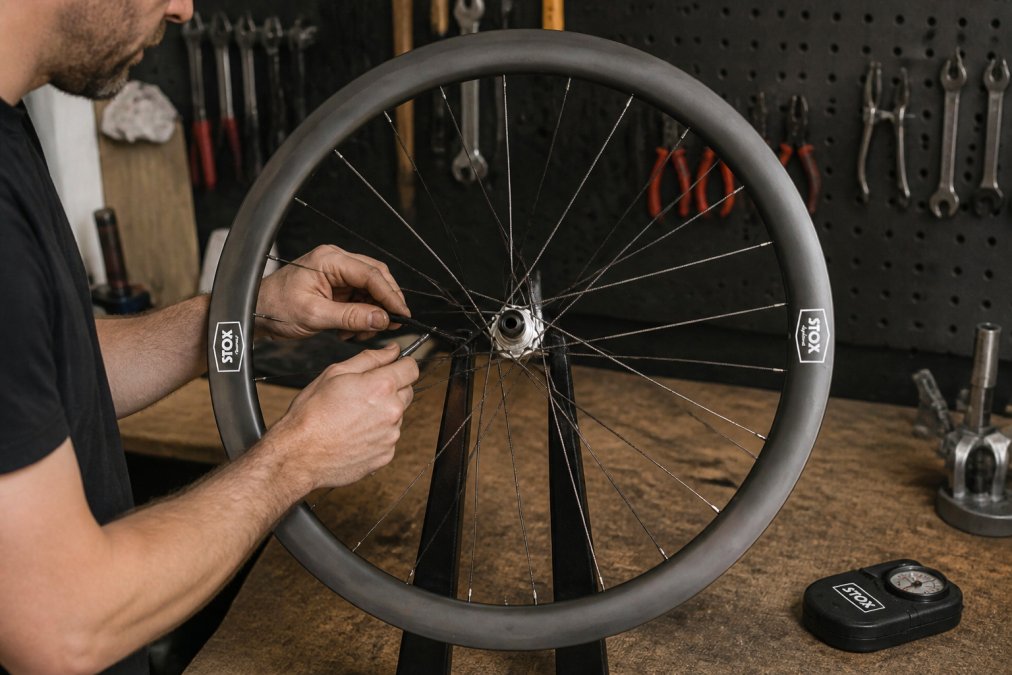
A hand-built wheelset is one where a skilled builder manually laces, tensions, and trues each wheel to precise specifications, using a spoke tension meter and iterative stress-relieving cycles to achieve uniform tension balance across every spoke. A factory wheelset is assembled by automated machinery on a production line, where speed and volume govern the process rather than precision.
Uneven spoke tension creates lateral stiffness asymmetry, accelerates spoke fatigue, and produces wheels that go out of true under load. Automated assembly lines set tension once and move on. Manual builders return to the wheel repeatedly, re-tensioning and truing until the tension balance across all spokes sits within a tight tolerance.
How Factory Wheels Are Made
Factory production relies on robotic lacing machines that thread spokes and set initial tension in a single pass. Automated systems cannot detect micro-variations in rim eyelet depth, hub flange geometry, or spoke elasticity that require real-time adjustment during the build. Most mass-produced wheelsets ship with acceptable tension variance rather than optimal tension balance.
Many factory wheelsets use non-standard nipple material, hub engagement mechanisms, or spoke counts that make aftermarket parts difficult to source. When something fails, you're often dependent on the original manufacturer for replacement components.
The Machine-Built Myth: What Automated Assembly Misses
Stress relieving is the process of applying lateral force to the wheel to seat spokes and nipples fully, then re-tensioning to compensate for the settlement. It requires tactile feedback and judgement. Automated lines skip this step or perform a simplified version, which means factory wheels often complete their stress-relieving cycle during the first few hundred kilometres of riding.
A properly stress-relieved hand-built wheel arrives stable. The tension has already settled and the lacing pattern is correct for the hub flange geometry and intended load.
Head-to-Head Comparison: Hand Built vs Factory Wheelsets
Hand built vs factory wheelsets differ across every dimension that affects real-world performance.
| Attribute | Hand-Built | Factory |
|---|---|---|
| Spoke tension consistency | Uniform, verified by meter | Variable, set by machine |
| Stress relieving | Full multi-cycle process | Minimal or absent |
| Lacing pattern choice | Custom to rider and use case | Fixed by model |
| Rim profile selection | Specified by rider | Determined by product range |
| Hub engagement | Rider-selected | Proprietary, limited options |
| Nipple material | Specified (alloy, brass, composite) | Standard, often non-serviceable |
| Spoke count | Optimised per discipline | Fixed |
| Serviceability | High, standard parts | Often restricted |
| Warranty | Build-specific, often longer | Manufacturer-dependent |
| Weight penalty | Minimised through component selection | Governed by production cost |
| Customisation | Full specification control | None |
Factory wheelsets deliver acceptable performance at lower upfront cost. Hand-built wheelsets deliver engineered performance, with every variable controlled for the rider's specific requirements.
A hand-built wheel using standard spoke counts, conventional cross-lacing or radial lacing, and off-the-shelf nipple material can be rebuilt by any competent wheel builder anywhere. A factory wheel with proprietary hub engagement or non-standard spoke interfaces locks you into that manufacturer's service ecosystem.
Custom Carbon Wheelset Benefits for Road, Gravel, and MTB
Custom carbon wheelset benefits extend beyond weight savings. Every specification, from rim profile to spoke material to hub engagement, is chosen for the actual conditions the wheel will face.
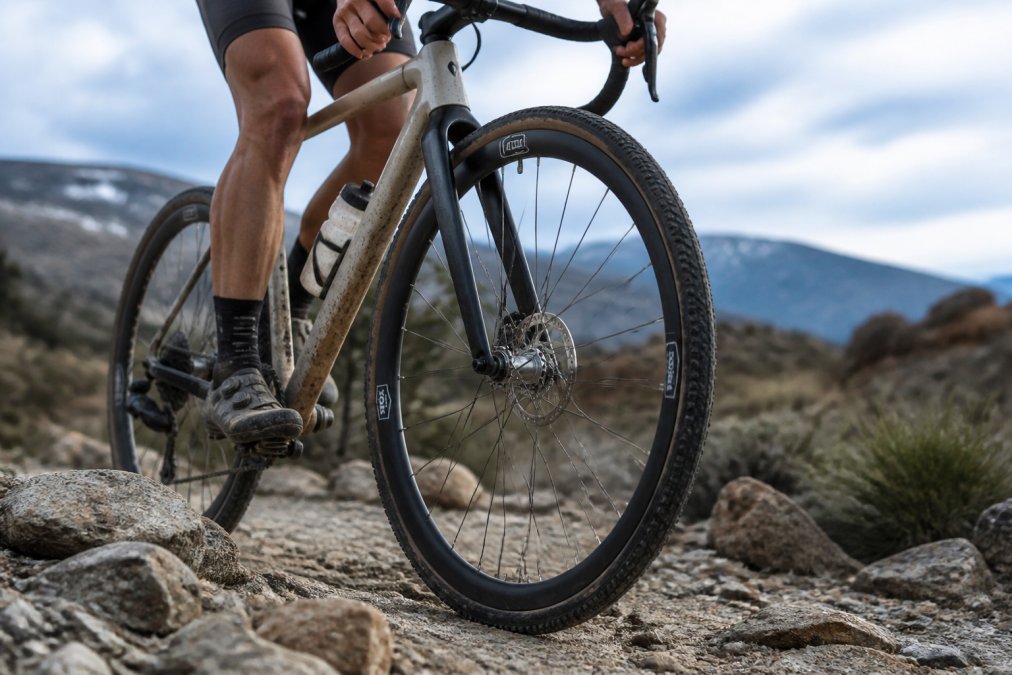
Carbon fibre rims offer a superior strength-to-weight ratio compared to aluminium. Filament wound carbon construction produces consistent fibre alignment and eliminates the void content that weakens lesser layups. Advanced polymer spokes reduce rotational mass while improving vibration damping. According to Berd Spokes technical documentation, Dyneema-based spokes offer 15 times the strength-to-weight ratio of steel. TiFi polymer spokes provide 52% more elasticity than steel and 110% more than carbon, allowing the rim to deform slightly independent of the hub for a noticeably smoother ride.
Rider Weight and Discipline-Specific Recommendations
Rider weight affects spoke count, lacing pattern, rim depth, and hub flange geometry. Getting these wrong produces a wheel that's technically within spec but not optimised for the load it carries.
| Rider Profile | Recommended Spoke Count | Lacing Pattern | Rim Depth | Spoke Type |
|---|---|---|---|---|
| Road racer, under 70kg | 24 front / 28 rear | Radial front / cross-lacing rear | 45-50mm | Carbon or TiFi |
| Gravel racer, 70-90kg | 28 front / 32 rear | Cross-lacing both | 45-54mm | TiFi or Berd |
| MTB / AM, 80-100kg | 32 front / 32 rear | Cross-lacing both | 30-36mm | Pillar Wing or steel |
| E-bike / heavy load, 90kg+ | 32-36 front / 36 rear | Cross-lacing both | 35-46mm | Steel or Berd asymmetric |
For gravel racers doing 80km+ events on rough terrain, an asymmetric rim profile reduces spoke tension imbalance. On a rear disc wheel with a symmetric rim, the difference in spoke tensions between the drive and non-drive side can reach 40% due to spoke bracing angles. The STOXbyHand Berd Spoked Asymmetric 46 Gravel Wheelset addresses this directly, reducing tension imbalance and raising non-drive side tension to approximately 70kgf for a far more balanced wheel.

Wheel Stiffness, Ride Quality, and Spoke Material Choices
Advanced spoke materials have changed the stiffness-versus-compliance calculus. TiFi polymer spokes reduce vibrations by approximately 15% compared to steel spoked wheels and approximately 29% compared to carbon spoked wheels, while maintaining the lateral stiffness needed for efficient power transfer. Berd polymer spokes provide similar vibration damping with the added benefit of being impervious to corrosion.
Rim profile also affects ride characteristics. A deeper rim increases aerodynamic efficiency but raises lateral stiffness, which can feel harsh on rough surfaces. For gravel and mixed-terrain riding, a mid-depth rim in the 45-50mm range offers a practical balance. The STOXbyHand TiFi Polymer Spoked Gravel 45, with a 45mm deep, 40mm external width rim and 32mm internal width, is built specifically for this use case, weighing in at approximately 1,190g.
Long-Term Cost Analysis: Purchase Price vs Lifetime Value
Factory wheels with proprietary components often require manufacturer-specific service. When a spoke breaks or a bearing fails, you're paying premium rates for parts that aren't available through standard channels. A hand-built wheel using standard components can be retrued, re-spoked, or rebuilt by any wheel builder at standard labour rates.
Consider the STOXbyHand MTB XC/AM 29er 30/36 Asymmetrical at $1,890. It's built with Pillar Wing spokes and a 54-tooth ratchet hub, both serviceable through standard aftermarket parts channels. For road and gravel riders, the STOXbyHand 45 FWT Wide Carbon Spoked GWR at $2,600 includes a three-year warranty on manufacturing defects and crash replacement at 60% RRP.

How to Choose Custom Bike Wheels That Match Your Riding
Choosing custom bike wheels starts with an honest assessment of four variables: your riding discipline, your system weight, your terrain, and your performance priorities. A common mistake is specifying the lightest possible build without accounting for system weight. A 1,100g wheelset optimised for a 65kg road racer will behave very differently under a 90kg gravel rider with a loaded frame bag.
The four-step specification process:
- Define your discipline: road racing, gravel endurance, XC mountain biking, all-mountain, or mixed use
- Confirm your system weight: rider weight plus bike, kit, and any carried load
- Identify your terrain: smooth tarmac, gravel, technical singletrack, or a mix
- Set your performance priority: minimum weight, maximum durability, aerodynamic efficiency, or vibration compliance
Rim Profile, Lacing Pattern, and Hub Engagement
Hub engagement refers to the number of engagement points in the freehub mechanism, which determines how quickly the drivetrain picks up when you resume pedalling. A 54-tooth ratchet provides finer engagement than a standard 18-tooth pawl system, which matters on technical terrain where micro-adjustments in power delivery affect line choice.
Lacing pattern affects both lateral stiffness and spoke fatigue. Radial lacing reduces weight but places high stress on the hub flange. Cross-lacing distributes stress more evenly and is the standard choice for rear wheels and disc brake applications. According to Sheldon Brown's wheel building technical reference, spoke tension balance is the single most important factor in long-term wheel reliability.
Specifying Your Build: The STOXbyHand Process
STOXbyHand builds each wheelset to order, with a lead time of approximately three weeks. You specify your hub standard, freehub body type, rider weight, intended use, and any preference for spoke material and rim depth. Each wheel goes through a multi-day build process: laced, trued, and tensioned on day one, then re-tensioned and re-trued on subsequent days until all pre-stretch has been removed from the spokes.
For riders considering the TiFi Polymer Spoked Gravel Max at $3,290, the front rim runs 54mm deep and 44mm wide, with the rear at 50mm deep and 37mm wide. This asymmetric depth configuration places aerodynamic priority at the front while the slightly shallower rear improves handling in crosswinds. Both wheels use TiFi polymer spokes and are built to the same 0.1mm trueness standard.

Wheelset Maintenance Tips to Protect Your Investment
Wheelset maintenance that genuinely extends service life focuses on three areas: tension monitoring, bearing care, and rim surface protection.
Spoke tension monitoring is the most neglected maintenance task. Tension should be checked after the first 200-300km on a new set of wheels, and then every six months for regular riders. A spoke tension meter allows you to catch tension drop before it cascades into a structural problem. For polymer spoke builds, tension limits differ from steel: Berd spokes have a maximum tension of 100kgf compared to approximately 120kgf for steel.
Bearing maintenance depends on bearing type. Ceramic bearings require less frequent service than steel bearings but are not maintenance-free. Inspect and regrease annually, or more frequently if the bike is ridden in wet or muddy conditions.
Rim surface care for carbon rims means avoiding prolonged exposure to petroleum-based lubricants on the brake track, and inspecting the rim surface for impact damage after hard riding. Hookless rims require tyre pressure management within the manufacturer's specified range.
As recommended in Bicycle Network Australia's maintenance guides, regular spoke tension checks and bearing inspections are the two maintenance tasks most likely to prevent catastrophic wheel failures on long rides.
- Check spoke tension at 200-300km on new wheels
- Re-true if any spoke sounds noticeably different when plucked
- Inspect rim surface for cracks or delamination every three months
- Service bearings annually, or after sustained wet-weather riding
- Verify tyre pressure is within rim manufacturer's specified range
- Confirm nipple integrity, particularly at the rim eyelet, each season
The difference between a wheelset that lasts three seasons and one that lasts a decade often comes down to these six checks. Hand-built wheels with standard components make every one of them straightforward to perform.
Choosing between hand built vs factory wheelsets is ultimately a decision about what you want your wheels to do over their entire service life. Factory options cover the basics at lower upfront cost, but the precision gap, the serviceability limitations, and the inability to specify components for your actual riding conditions make them a compromise most serious cyclists outgrow quickly. STOXbyHand builds each wheelset to a documented 0.1mm trueness standard, with spoke material and rim profile chosen for the rider's specific weight, discipline, and terrain. Get started with STOXbyHand and receive a wheelset built to your exact specification, backed by over 12 years of hand-building experience and a three-year manufacturing warranty.
Frequently Asked Questions
Are hand-built wheels more durable than factory-built alternatives?
Hand-built wheels are generally more durable over the long term because each spoke is individually tensioned and stress-relieved by a builder who can detect inconsistencies a machine cannot. Uniform spoke tension reduces spoke fatigue and prevents the lateral flex that causes premature failure. Factory wheels often leave the production line with tension imbalances, which accelerates wear on rough terrain.
What are the main advantages of custom spoke lacing on a hand-built wheelset?
Custom lacing lets a builder match the spoke count, lacing pattern, and nipple material to your weight, riding discipline, and rim profile. An asymmetric lacing pattern on a disc-brake rear wheel, for example, balances spoke tension between the drive and non-drive sides. This improves mechanical reliability, reduces spoke fatigue, and produces better lateral stiffness without sacrificing vertical compliance.
Do hand-built wheels require more frequent maintenance than factory wheels?
A properly stress-relieved, hand-built wheel typically requires less frequent truing than a factory wheel. Because the builder works through multiple tension and truing cycles until all pre-stretch is removed, the wheel settles quickly and holds true under load. Factory wheels often bed in over the first few hundred kilometres and need an early truing visit. After that initial period, a well-built hand wheel can go considerably longer between adjustments.
How does rim profile selection affect custom wheelset performance?
Rim depth directly affects aerodynamics and ride characteristics. Deeper rims, such as a 45-54mm carbon profile, reduce aerodynamic drag at higher speeds but add a weight penalty and increase crosswind sensitivity. Shallower rims offer better vertical compliance and handling in technical terrain. Internal rim width also matters: wider internal widths, from 25mm upward, support larger tyres and improve the tyre-to-rim airflow profile, lowering rolling resistance on gravel and mixed-surface riding.
Are factory wheels easier to repair if a spoke breaks?
Factory wheels that use proprietary components, including bladed spokes, non-standard nipple sizes, or hub-specific spoke heads, can be difficult and expensive to repair. Replacement parts may only be available through the original manufacturer, and lead times can be long. Hand-built wheels using standard or well-supported aftermarket spokes, such as Berd polymer or TiFi, are typically easier to service because the builder who constructed the wheel can also rebuild or replace individual components.
This article was written using GrandRanker