

Table of Contents
- How to Identify High Quality Carbon Wheelsets: A Practical Checklist
- Carbon vs Alloy Wheels: Which Material Delivers Better Performance
- Carbon Wheelset Rim Depth: Finding the Right Balance
- Carbon Wheelset Durability: Impact Resistance and Fatigue Testing
- Weight and Stiffness: Understanding Performance Trade-offs
- Spoke Options and Materials: Carbon, Berd, and TiFi Polymer
- Matching Your Wheelset to Riding Style and Terrain
- Frequently Asked Questions
Last Updated: October 10, 2026
How to Identify High Quality Carbon Wheelsets: A Practical Checklist
Identifying high quality carbon wheelsets requires inspecting manufacturing precision, material quality, and build standards that most riders overlook. At STOXbyHand, our 12 years of specialised experience reveals what separates durable, responsive wheelsets from disappointing ones.
High quality carbon wheelsets combine precise rim construction, spoke tension uniformity, and hub quality to deliver consistent performance across thousands of kilometres.
Below, we'll walk you through the practical checklist that separates premium wheelsets from mediocre ones.
Visual Inspection: What to Look For
A quality carbon wheelset shows clean, consistent finish on the rim surface with no visible cracks, delamination, or gaps between carbon layers. Run your fingers across the rim, it should feel smooth without rough edges or splintering.
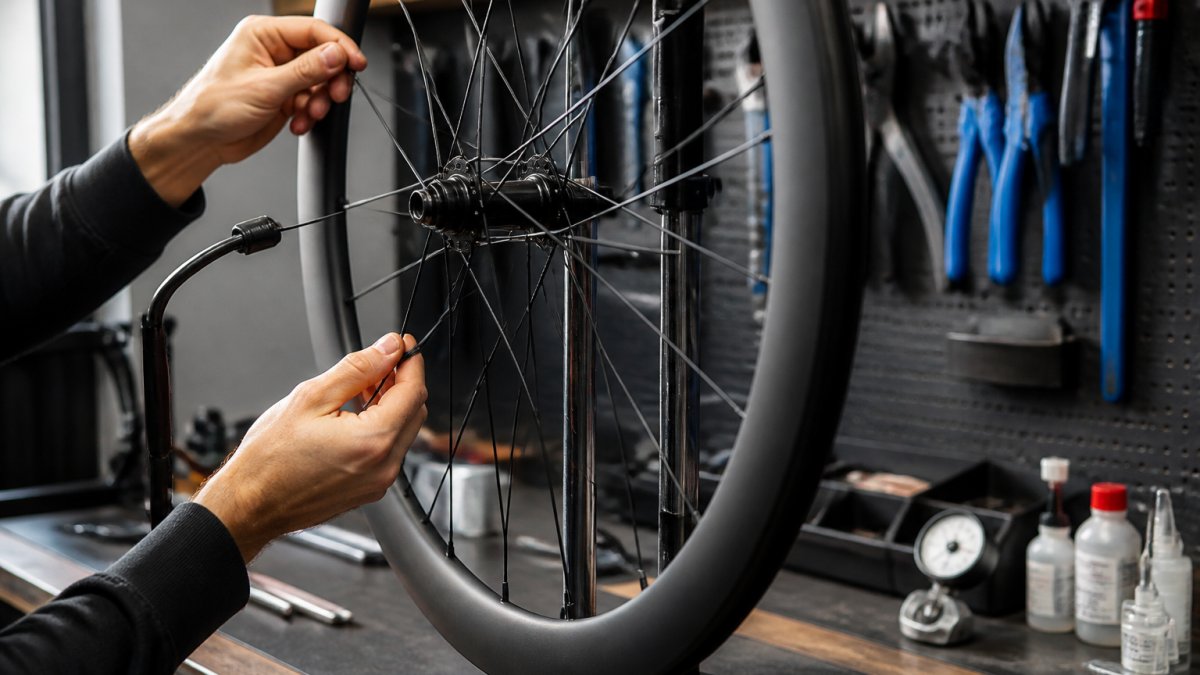
Spin the wheel slowly and watch for wobble or lateral movement, which suggests poor build quality. Spokes should appear evenly tensioned; uneven tension creates stress points that lead to early failure.
Quality hubs use sealed bearings and heat-treated alloy components. The hub should rotate smoothly with minimal play when you grab the rim and try to move it side to side. Any clicking or grinding sounds indicate bearing issues.
Build Quality and Manufacturing Standards
Hand-built wheels achieve trueness tolerances that machine building struggles to match. STOXbyHand builds every wheelset to 0.1mm lateral and radial trueness, keeping the rim perfectly centred as it rotates.
Uniform spoke tension is critical: inconsistent tension creates stress concentration points where spokes fail prematurely. Quality builders measure and adjust each spoke individually across the entire wheel.
High modulus carbon with EPS internal moulding reduces voids and weak spots inside the rim through greater internal pressure during manufacturing. This takes more time and skill than air-bag moulding.
| Build Quality Factor | What It Means | Why It Matters |
|---|---|---|
| Trueness tolerance | Lateral and radial runout measurement | Prevents wobbling and uneven braking |
| Spoke tension uniformity | Each spoke measured and adjusted | Extends wheel lifespan and maintains responsiveness |
| Rim construction method | EPS moulding vs air-bag moulding | EPS reduces internal voids and improves durability |
| Hub bearing quality | Sealed or ceramic bearings | Smooth rotation and resistance to water damage |
Carbon vs Alloy Wheels: Which Material Delivers Better Performance
Carbon offers a superior stiffness-to-weight ratio and aerodynamic advantages; alloy wheels cost less and suit riders prioritising durability over performance gains.
Carbon wheels excel at high speeds where aerodynamics matter, allowing deeper rim profiles without excessive weight. A 50mm carbon rim weighs significantly less than an equivalent alloy rim.
Alloy wheels perform well for aggressive terrain. For gravel racing and mountain biking, alloy's impact resistance can be a factor.
Carbon Wheelset Rim Depth: Finding the Right Balance
Deeper rims improve aerodynamics but increase weight and affect crosswind handling. Shallower rims offer better handling and climbing but sacrifice flat-terrain speed.
Shallow Rims for Climbing and Handling
Shallow rims (30-40mm) prioritise handling and weight, suiting climbers who value responsive steering. They experience less wind pressure, making them stable in crosswinds and easier to control on technical descents.
A shallow rim wheelset can weigh under 1,400 grams with modern carbon construction.
Mid-Depth Rims for All-Round Performance
Mid-depth rims (45-50mm) offer the best compromise for most riders, providing meaningful aerodynamic benefits without excessive weight gain or handling compromise. The STOXbyHand Carbon Spoked 5031 uses a 50mm depth for road and gravel racing.
Mid-depth rims perform well across varied terrain and wind conditions.
Deep Rims for Aerodynamic Advantage
Deep rims (55-65mm) offer aerodynamic benefits for flat courses. The STOXbyHand Carbon Spoked Wave 5031 uses a 55/65mm depth configuration for riders who can generate consistent power.
Deep rims experience more wind pressure and add weight, impacting climbing performance.
Carbon Wheelset Durability: Impact Resistance and Fatigue Testing
Quality carbon wheelsets resist impact damage and fatigue cracking through careful material selection and construction.
Understanding Impact and Fatigue Testing Standards
Reputable manufacturers conduct impact testing, fatigue testing, and braking performance testing. Results are only comparable when test methods are identical.
Impact testing simulates crash damage by dropping a weighted object onto the rim or striking it with a pendulum, measuring the impact energy (in joules) required to crack or permanently deform the rim.
Fatigue testing applies repeated stress cycles to simulate thousands of kilometres of riding.
Braking performance testing measures rim wear and heat dissipation under repeated braking.
Carbon Spoked 5031 (1281 grams) →
How to Evaluate Manufacturer Test Claims
- Test method reference: ISO 4210-3 (impact), ISO 4210-4 (fatigue), or equivalent standard.
- Specific load and cycle counts: "Tested to 100 kg load for 150,000 cycles" is verifiable; "tested for durability" is not.
- Pass/fail criteria: What constitutes success? (e.g., "No cracks after 80-joule impact"; "Lateral runout under 0.5mm after 200,000 cycles at 100 kg load").
- Rider weight range: Fatigue tests should specify the load applied. A test at 80 kg load is not equivalent to one at 120 kg load.
- Test environment: Temperature, humidity, and wet or dry conditions matter.
Material Selection and Internal Structure
High modulus carbon resists fatigue, maintaining stiffness under repeated stress cycles. Quality builders use Toray T700, T800, and T1000 carbon.
Impact resistance depends on rim wall thickness and internal structure. EPS (expanded polystyrene) internal moulding applies greater pressure during manufacturing than air-bag moulding, compressing carbon fibres more densely and reducing internal voids.
Spoke Tension and Wheel Trueness Standards
Spoke tension uniformity is an important durability factor. Uneven tension creates stress concentration where spokes attach to the rim. Quality builders measure spoke tension with a tensiometer, ensuring each spoke matches a target range. This process takes time.
Wheel trueness must be maintained throughout the wheelset's life. A wheel built to 0.1mm trueness offers high precision.
Warranty and Crash Replacement Coverage
Warranty coverage is important. Quality builders offer 3-year warranties on manufacturing defects. Budget wheelsets often carry 1-year warranties or exclude fatigue failures.
Crash replacement coverage is important. Accidents happen. Compare replacement costs and exclusions: some manufacturers exclude damage from impacts above a certain energy threshold, while others cover all crash damage at a fixed percentage of retail price.
Weight and Stiffness: Understanding Performance Trade-offs
Weight and stiffness are often presented as competing priorities, but they're actually complementary. A light wheelset that lacks stiffness will flex under load. A stiff wheelset that's heavy will slow climbing.
Lighter wheelsets accelerate faster and climb easier. The STOXbyHand Carbon Spoked 5031 at 1,281 grams delivers this advantage for riders under 85 kilograms.

Stiffness determines power transfer. A stiff wheelset transmits your pedal power directly to forward motion. A flexible wheelset absorbs energy in rim flex and spoke deflection.
The 21/24 spoke configuration on the Carbon Spoked 5031 increases stiffness for heavier riders. The extra rear spokes (16 on the drive side, 8 on the non-drive side) provide lateral stiffness that prevents flex during hard efforts.
Spoke Options and Materials: Carbon, Berd, and TiFi Polymer
Spoke material affects both performance and durability. Carbon spokes are lightest and offer superior stiffness. Berd and TiFi polymer spokes provide alternative benefits worth understanding.
Carbon spokes reduce rotational weight. They're stiffer than traditional steel. The STOXbyHand wheelsets featuring carbon spokes feel responsive.
Berd spokes use aramid fibres for impact resistance. They're slightly heavier than carbon.
TiFi polymer spokes offer a middle ground between weight and durability. They're lighter than steel.
Matching Your Wheelset to Riding Style and Terrain
The best wheelset matches your specific riding demands. Road racers, gravel riders, and mountain bikers need different characteristics.
Road racers prioritise aerodynamics and weight. Mid-depth or deep rim wheelsets with carbon spokes offer performance benefits at high speeds. The STOXbyHand Carbon Spoked Wave 5031 suits this application.
Gravel racers need durability and all-round performance. Mid-depth rims with strong spoke options handle rough terrain. The ability to run larger tyres without rubbing matters here.
Mountain bikers require impact resistance and stiffness. Shallower rims and durable spoke materials suit technical terrain.
Choosing high quality carbon wheelsets means inspecting build quality, understanding rim depth trade-offs, and matching specifications to your riding style. The STOXbyHand Carbon Spoked 5031 delivers the precision hand-building, uniform spoke tension, and durable construction that separates premium wheelsets from alternatives. With over 12 years of experience, we meticulously craft each wheel with advanced materials, offering unique spoke options like carbon fiber, Berd, and TiFi polymer to provide customizable builds tailored for specific riding styles. Our commitment to precision ensures every rider receives a durable, high-quality wheelset designed to elevate their cycling experience through superior performance and reliability. Explore our wheelset options and find the configuration that matches your riding demands.
Frequently Asked Questions
How can you tell if a carbon wheelset is good quality?
High quality carbon wheelsets show uniform spoke tension, precise lateral or radial runout (wheel trueness to 0.1mm), and consistent rim finish with no visible voids or delamination. Check that the rim width is suitable for your tyre size, the hub engagement is smooth, and the manufacturer provides detailed specifications on carbon fibre grade, rim depth, and rider weight limits. Hand-built wheels from experienced builders offer precise spoke tension uniformity.
What should I check before buying carbon wheels?
Verify the rim depth suits your riding style and terrain, confirm the internal rim width is suitable for your tyres, and check spoke count for your rider weight. Ask about warranty coverage, crash replacement policies, and whether the wheels come with a warranty on manufacturing defects. Confirm the hub type, bearing quality, and freehub compatibility with your drivetrain before purchase.
Are carbon wheels durable enough for gravel racing?
Yes, quality carbon wheelsets designed for gravel are durable for aggressive terrain when built to appropriate specifications. Gravel wheels need adequate spoke count for impact resistance, reinforced rim construction with EPS internal moulding for strength, and a builder experienced in load distribution. Look for wheelsets with crash replacement coverage. Rider weight and power output matter significantly.
What is more important in a carbon wheelset: rim depth, weight, or stiffness?
All three matter, but prioritisation depends on your riding style. High-quality carbon wheelsets like the Carbon Spoked 5031 offer a balance: 50mm depth for aero benefits, 1281 grams for climbing capability, and carbon spokes for lateral stiffness. Match rim depth, weight, and spoke construction to your terrain and riding goals.