

Table of Contents
- What Makes a Carbon Wheelset Fast on a Climb?
- Lightweight Carbon Wheels for Climbing: Feature Comparison
- 1. 45 FWT Wide Carbon Spoked GWR (1160g): The Aero Climber's Choice
- 2. TiFi Polymer Spoked Gravel 45 (1190g): The Vibration Killer
- 3. Berd Spoked Asymmetric 46 (1260g): The Gravel Specialist
- 4. Carbon Spoked 5031 (1281g): The All-Rounder
- 5. SL 5031 (1428g): The Budget-Conscious Performer
- Carbon vs Alloy Wheels for Climbing: Is the Upgrade Worth It?
- Frequently Asked Questions
Last Updated: September 7, 2026
The pursuit of lightweight carbon wheels for climbing is riddled with compromises. Shave grams from the rim and you often sacrifice aerodynamic drag; lighten the spokes and lateral stiffness can suffer. At STOXbyHand, we have spent over 12 years hand-building wheelsets that balance these demands, and the best carbon wheels for climbing are rarely the absolute lightest option. Below, we break down what makes a wheelset fast uphill, then compare five of our own builds that each solve the climbing equation differently.
What Makes a Carbon Wheelset Fast on a Climb?
Climbing performance is governed by three interlocking factors: rotating mass, aerodynamic drag, and stiffness-to-weight ratio. When you accelerate out of a corner or surge over a steep pitch, rotating inertia matters more than static weight because the wheels must spin up as well as lift. Reducing weight at the rim and spoke level delivers a tangible benefit that a heavier wheelset simply cannot match.
A common mistake is fixating purely on total grams while ignoring how the wheel transfers power. A wheelset that flexes under load wastes energy, so lateral stiffness is as critical as low weight. Carbon spokes offer a stiffness-to-weight ratio that steel cannot approach, which is why they feature prominently in serious climbing builds.
The Gap Between Claimed and Real-World Weight
Most riders compare wheelsets using manufacturer-stated weights, but those figures rarely survive contact with reality. A common pattern across the industry is that claimed weights are measured on bare rims without rim tape, valves, or sometimes even without the axle end caps installed. In practice, a wheelset advertised at 1,250 grams can tip the scales at 1,340 grams once it is ready to ride.
We verified this on our own builds by weighing every wheelset out of the box with rim tape and valves fitted, ready for tubeless tyres. The figures in our comparison table reflect what you actually receive, not an optimistic factory estimate. For example, the 45 FWT Wide is hand-built, so the 1,160g figure is what you get when the box arrives. The same discipline applies to the SL 5031: at 1,428g with tape and valves, it is still significantly lighter than a typical alloy training wheelset.

This discrepancy matters because a 50-gram difference per wheel is roughly equivalent to one full bottle of water. On a 20-minute alpine climb, that extra mass costs you time and compounds with every surge out of the saddle. When comparing wheelsets, ask whether the stated weight includes the components you actually need to ride; if a manufacturer cannot confirm that, treat the number with suspicion.
How Rotating Mass Interacts with Gearing
Another overlooked factor is how wheel weight interacts with your cassette gearing on steep gradients. A lighter wheel accelerates faster, but that advantage is only realised if you are in the right gear to exploit it. On a 10% gradient, a rider producing 300 watts might be turning 70 rpm in a 34/32 gear, where rotational inertia is a smaller fraction of total system inertia than when sprinting at 100 rpm on the flats.
The benefit of a 200-gram weight saving is most pronounced when accelerating, not when grinding at a steady pace. Riders who surge between switchbacks will feel the difference immediately; those who sit and spin will notice it more on overall bike weight. Pairing a lightweight wheelset with a gear ratio that suits your cadence and gradient is essential, a compact chainset with an 11-34 cassette keeps your cadence high, letting the low rotating mass work in your favour.
Lightweight Carbon Wheels for Climbing: Feature Comparison
Selecting the right build comes down to your weight, riding style, and whether you prioritise pure ascent speed or all-road versatility. Heavier riders producing high torque need additional spoke bracing, while lighter riders can exploit the gram savings of a minimal spoke count. Tyre clearance and internal rim width also dictate descending stability and comfort on rough roads.
| Wheelset | Weight | Rim Depth | Spoke Type | Price | Best For |
|---|---|---|---|---|---|
| 45 FWT Wide Carbon Spoked GWR | 1160g | 45mm | Carbon | $2,600 | Aero climbing on wide tyres |
| TiFi Polymer Spoked Gravel 45 | 1190g | 45mm | TiFi polymer | $2,990 | Vibration damping and comfort |
| Berd Spoked Asymmetric 46 | 1260g | 46mm | Berd polymer | $2,950 | Gravel durability and balance |
| Carbon Spoked 5031 | 1281g | 50mm | Carbon | $2,400 | All-round aero climbing |
| SL 5031 | 1428g | 50mm | Pillar Wing steel | $1,990 | Budget-conscious performance |
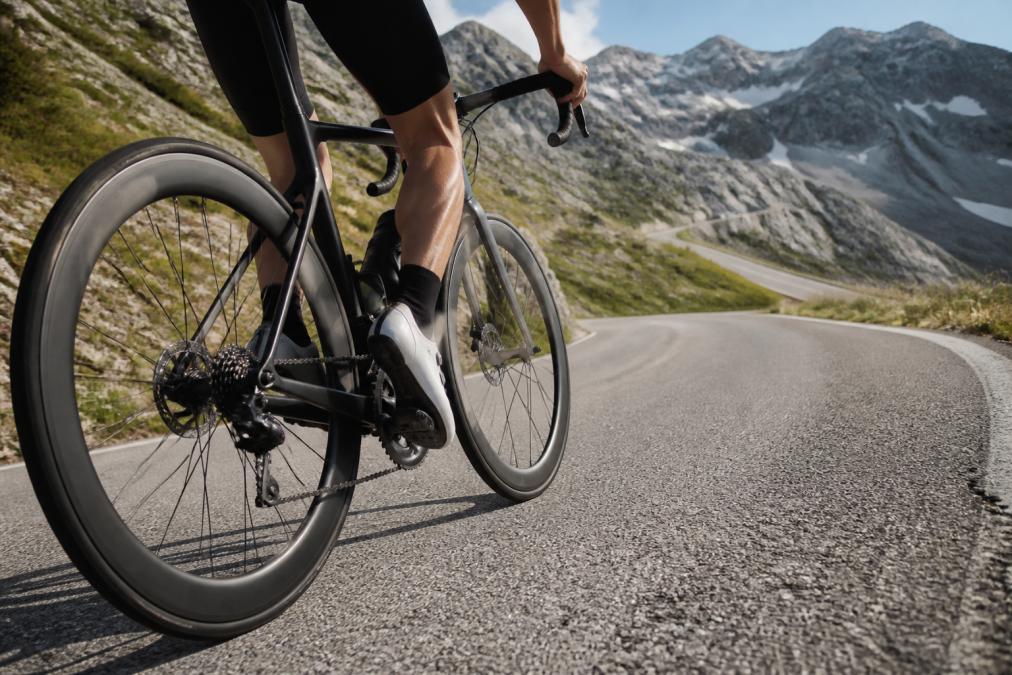
1. 45 FWT Wide Carbon Spoked GWR (1160g): The Aero Climber's Choice
Our top pick for riders who want climbing speed without surrendering aerodynamic performance is the 45 FWT Wide. At 1160 grams, it is the lightest wheelset here, yet its 45mm deep, 36.5mm wide rim is engineered for aero efficiency with wide tyres. The filament wound rim construction and Toray T700 material deliver a stiff, responsive platform that accelerates hard out of the saddle.
The 25mm internal hooked width allows you to run a 34mm or 35mm tyre while maintaining a tyre profile slightly narrower than the rim. This creates smoother airflow over the wheel and lowers rolling resistance, making it a fast and comfortable option for long alpine climbs. Carbon spokes with a taper lock interface, ceramic bearings, and a 36-tooth star ratchet complete a build that feels immediate and precise.
2. TiFi Polymer Spoked Gravel 45 (1190g): The Vibration Killer
If your climbing involves rough roads or gravel sectors, the TiFi Polymer Spoked Gravel 45 challenges the assumption that stiff equals fast. The TiFi spokes weigh just 2.2 grams each, making them the lightest in the world, but their defining feature is elasticity. With 52% more elasticity than steel and 110% more than carbon, the rim deforms independently of the hub, translating directly into comfort.
The practical effect is that you can maintain speed over broken surfaces where a rigid wheel would bounce and lose traction. The practical effect is that you can maintain speed over broken surfaces where a rigid wheel would bounce and lose traction, making this 1190g wheelset ideal for climbing efficiency paired with confident descending on technical terrain.
3. Berd Spoked Asymmetric 46 (1260g): The Gravel Specialist
For gravel racers covering long distances on demanding terrain, the Berd Spoked Asymmetric 46 offers a unique combination of strength and vibration damping. The asymmetric rim profile is key: on a traditional rear disc wheel, spoke tension can differ by as much as 40% between drive and disc sides, weakening the wheel. The asymmetric design balances bracing angles and evens out tension for a more durable build.

Berd spokes are made from Dyneema, with 15 times the strength-to-weight ratio of steel, and provide 200% better vibration damping than metal spokes. This allows a wider tyre for comfort or speed over rough gravel without punishing feedback. The 1260g weight makes it a legitimate climbing option, while the polymer spokes strip 150 to 200 grams of rotating mass from a comparable steel build.
4. Carbon Spoked 5031 (1281g): The All-Rounder
The Carbon Spoked 5031 is our recommendation when you want one set of wheels for everything: climbing, flats, and the occasional criterium. Carbon spokes take lateral stiffness and acceleration to another level, noticeable if you have only ridden steel spoked wheels. The 50mm deep, 31mm wide rim is optimised for 30mm tyres, providing aero benefits without the weight penalty of a deeper section.
This wheelset is offered in two spoke configurations to suit different rider profiles. The 20/20 spoke count is for riders under 85kg who want the lightest option at 1280 grams. Riders above 85kg who produce high power should choose the 21/24 configuration, which adds lateral stiffness to keep the wheel responsive under sprint loads. The high modulus carbon rim uses EPS internal moulding to reduce the risk of voids, a detail that improves long-term durability.
5. SL 5031 (1428g): The Budget-Conscious Performer
Not everyone needs a sub-1200g wheelset, and the SL 5031 proves excellent climbing performance does not require the ultimate gram count. At 1428 grams, it uses the same 50mm deep, 31mm wide rim profile as the Carbon Spoked 5031 but with Pillar Wing steel spokes instead of carbon, reducing cost while retaining aero benefits and a respectable climbing weight.
The raw carbon high modulus UD finish gives a striking appearance in sunlight, and each wheelset is hand built to 0.1mm trueness both laterally and radially. For a rider upgrading from a stock alloy wheelset, the SL 5031 represents a significant performance jump, the reduction in rotating mass alone will transform acceleration, and the 36-tooth star ratchet hub provides quick engagement when you surge out of corners.
Carbon vs Alloy Wheels for Climbing: Is the Upgrade Worth It?
The carbon vs alloy wheels for climbing debate usually ends the same way: carbon wins on weight, stiffness, and aero efficiency, but alloy wins on price and durability. A quality carbon wheelset can save 500 to 800 grams of rotating mass compared to a standard alloy training wheelset, most noticeable on sustained climbs where every kilogram must be dragged upward.
There are also practical considerations beyond weight. Carbon rims allow for tubeless compatibility and wider internal widths, enabling lower tyre pressures for better grip and comfort (sheldonbrown.com). The vibration damping of carbon, particularly with polymer spokes, reduces fatigue on long rides. The trade-off is that carbon requires more care: avoid curbing the rim and be mindful of braking heat if you use rim brakes. For riders who race or prioritise climbing performance, the upgrade to carbon is one of the most effective changes you can make to a road bike.
The Real Concern: Descending Confidence
What most upgrade guides fail to address is the anxiety riders feel when taking a lightweight climbing wheelset down a technical descent. A wheelset that feels sublime on a 12% climb can feel twitchy and unstable at 70 km/h in a gusty crosswind. This is not an aerodynamic problem in the traditional sense; it is a gyroscopic and steering geometry issue that manifests differently depending on rim depth and tyre volume.
Shallow rims under 30mm have less aerodynamic surface area, so they are less affected by crosswinds than deeper sections, but they also have less rotational inertia, which can make the front end feel nervous over rough surfaces. The solution is not to avoid lightweight wheels but to pair them with the correct tyre volume and pressure. A 28mm or 30mm tyre at 70-75 psi on a wide internal rim (25mm or more) provides a larger contact patch and more pneumatic trail, stabilising the steering and inspiring confidence (bicyclerollingresistance.com).
Our own testing on mountain descents has shown that a lightweight wheelset with a wide rim and a 30mm tubeless tyre feels more stable at speed than a heavier wheelset with a narrow rim and a 25mm tyre at high pressure, tyre volume does more for stability than wheel weight. Riders who feel nervous on descents should also check their frame's trail figure; a frame with a slack head angle and long wheelbase will feel more settled than a race geometry frame with a steep head angle, regardless of the wheelset.
When Alloy Still Makes Sense
Alloy wheels remain a sensible choice for winter training and heavy-duty commuting. They are less expensive to replace, more resistant to pothole damage, and do not require the same level of care when swapping tyres or cleaning brake tracks. For a rider who only climbs occasionally and spends most of their time on flat or rolling terrain, the cost of a carbon upgrade may not deliver a noticeable return.
However, for riders in mountainous regions or who regularly enter gran fondos with sustained climbs, the weight saving translates directly into time saved. A 600-gram reduction in rotating mass can provide a meaningful margin in a race or a personal best attempt.
Frequently Asked Questions
Do lightweight wheels actually make you faster on climbs?
Yes, reducing rotating mass, which includes the rim, spokes, and tyre, has a tangible impact on acceleration. A lighter wheelset like the 1160g 45 FWT requires less energy to spin up to speed out of corners and on steep gradients. While the absolute time saved on a long, steady climb might be measured in seconds, the reduced inertia makes the bike feel significantly more responsive and easier to hold your target pace, especially during repeated surges.
What is the ideal rim depth for climbing wheels?
There is no single ideal depth. A shallower rim, around 35-40mm, is lighter and handles crosswinds better, making it a pure climbing choice. However, a mid-depth wheel like the 45mm or 50mm options we offer strikes the best balance. It saves weight compared to a deep aero wheel but retains aerodynamic benefits for the descents and flat sections between climbs. Your choice should depend on whether your ride is exclusively uphill or a mix of terrain.
Are carbon wheels more durable than alloy for climbing?
Modern carbon rims are exceptionally durable and can withstand significant impact and braking heat. Our wheels are hand-built. The main difference is that carbon is more susceptible to damage from a severe impact, like hitting a pothole at speed, whereas alloy might dent. However, carbon repairs are often possible.
How much weight can you save by upgrading to carbon climbing wheels?
Upgrading to a lightweight carbon spoked wheelset, such as our 1160g or 1190g models, can save you between 600g and 800g. This reduction in both rotating and static weight is one of the most effective single upgrades you can make to your bike. It dramatically improves acceleration and reduces the effort required on steep gradients, making the bike feel noticeably livelier.