

Last Updated: November 4, 2026
Quick Summary
Set tubeless gravel tire pressure from a weight-based range, roughly 1.8-2.1 bar front and 2.0-2.3 bar rear for a 65-80kg rider on a 40-45mm tyre, then treat any calculator result as a midpoint. Drop slightly for loose or wet surfaces, raise it for hardpack and rocky courses, and always stay under the maximum pressure marked on your rim.
- As tyre width goes up, pressure comes down; wider rims also allow slightly lower pressure.
- Run the front a little softer than the rear, since the rear carries more load and drive force.
- Set your baseline the day before, then recheck on race morning because temperature shifts pressure.
- Use the same gauge every time so you can tell whether a change came from the tyre or the tool.
- On rocky courses, err slightly higher to avoid rim strikes and pinch punctures.
Table of Contents
- Why Tubeless Tire Pressure Decides Your Gravel Race
- Using a Gravel Bike Tyre Pressure Calculator Without Trusting It Blindly
- Tubeless Gravel Tyre Pressure by Weight: The Starting Numbers
- Gravel Tyre Pressure by Tyre Width and Rim Width
- Gravel Racing Tyre Pressure for Different Terrain and Conditions
- Front and Rear Pressure, Tubeless Versus Tubes, and Casing Effects
- A Race-Day Testing Protocol and Failure Prevention
- Building a Wheelset That Rewards Low Pressure
- Frequently Asked Questions
Why Tubeless Tire Pressure Decides Your Gravel Race
Gravel tire pressure for tubeless racing is the air pressure you run in a tubeless gravel setup, and it decides how fast you go, how well you grip, and whether you finish with intact rims. STOXbyHand builds hand-built carbon gravel wheelsets, and pressure is one of the most common questions riders ask. Get it right and a wide, low-pressure setup feels fast and calm on rough gravel. Get it wrong and you either bounce off every rock or pinch through the tyre on the first sharp edge.
Below, we explain how to set pressure by weight, width, rim width and terrain, along with a race-day protocol and the mistakes that commonly end races early.
Using a Gravel Bike Tyre Pressure Calculator Without Trusting It Blindly
A gravel bike tyre pressure calculator is a useful starting point, not a final answer. Most tools ask for rider weight, tyre width and rim width, then return a number. That number assumes a clean, dry, average surface and a particular casing stiffness. Real gravel rarely matches those assumptions, so the calculator output should be treated as a midpoint you then validate.
Here is how we would treat any calculator output:
- Treat the result as a midpoint, not a target
- Drop pressure slightly for loose or wet surfaces
- Raise it slightly for hardpack, tarmac transfers or heavy rim-strike risk
- Recheck after the first test ride, because tyres settle and sealant moves
What most guides miss is that calculators cannot see your rim, your casing or your gauge. A hookless rim and a hooked rim carry different limits, so always check the maximum pressure marked on the rim itself before you inflate.
Measurement accuracy and repeatability
The number on the calculator is only as good as the number on your gauge. Cheap floor pumps and separate digital gauges can disagree by a meaningful margin, so the absolute reading matters less than using the same gauge every time you compare setups.
Temperature also shifts pressure. A tyre set at dawn in cold air will read higher once the sun is up and the tyre has been worked on a climb or a descent.
Watch out: a calculator that asks only for rider weight and tyre width is ignoring rim width and casing, so do not treat its output as a prescription, use it to get within range, then adjust for your rim, your casing and your course.
A transparent worked example
Take a rider at roughly 78kg on a 45mm tyre mounted on a modern wide rim, racing a mixed course with hardpack, loose gravel and a few rocky sections. A calculator might return something near 2.0 bar front and 2.2 bar rear for an average surface. Treat that as the midpoint. For the loose sections, drop slightly toward the lower end of the range; for the rocky sections, keep the rear closer to the midpoint to protect the rim. The result is a baseline of roughly 1.9 bar front and 2.2 bar rear, which you then validate on a test ride over similar ground.
Tubeless Gravel Tyre Pressure by Weight: The Starting Numbers
A practical starting point for tubeless gravel tyre pressure is a range by rider weight, then fine-tuned from there. Heavier riders need more air to protect the rim and tyre. Lighter riders can run less and gain comfort and grip.
The following is a general working chart for a 40-45mm tyre on a modern wide rim:
| Rider weight | Front pressure | Rear pressure | Notes |
|---|---|---|---|
| Under 65kg | 1.6-1.8 bar | 1.8-2.0 bar | Softer, more grip |
| 65-80kg | 1.8-2.1 bar | 2.0-2.3 bar | Common race range |
| 80-95kg | 2.0-2.3 bar | 2.3-2.6 bar | Add air for rough courses |
| Over 95kg | 2.2-2.6 bar | 2.5-2.9 bar | Watch rim-strike risk |
These are bar figures. If your gauge reads PSI, convert before you compare, and stay under the maximum pressure printed on your rim.
Gravel Tyre Pressure by Tyre Width and Rim Width
Tyre width and rim width change the air volume, and air volume changes the pressure you can safely run. A wider tyre at the same pressure holds more air and gives more cushioning. A wider rim supports the tyre sidewall better, so it resists squirm at low pressure.
The practical rule: as tyre width goes up, pressure comes down. As rim width goes up, you can also run slightly lower pressure without the tyre rolling off the bead. If you want the deeper detail on how your specific rim shifts the numbers, read our guide on how rim width changes tyre pressure before you set yours.
A few things to check:
- Match the pressure to the tyre's measured width, not the label
- Confirm your rim is hookless or hooked before pushing limits
- Never exceed the maximum pressure on the rim
- Keep front and rear within a sensible gap of each other
Gravel Racing Tyre Pressure for Different Terrain and Conditions
Gravel racing tyre pressure for different terrain is where most riders leave time on the table. The same course can demand two different setups depending on the weather that morning, and the right answer is always a trade-off between grip, speed and puncture protection rather than a single correct number.
Berd Spoked Asymmetric 46 Gravel Wheelset 1260g →
Here is how we would adjust, with the trade-off made explicit:
- Loose gravel: drop slightly for more float and grip. The trade-off is more rolling resistance on firm sections and a higher risk of sidewall cuts from sharp stones.
- Rough, rocky roads: keep pressure up to avoid rim strikes and pinch punctures. The trade-off is less comfort and less grip on the loose patches between the rocks.
- Wet conditions: lower pressure for traction, but watch for sidewall cuts and burping on off-camber corners. The trade-off is that lower pressure improves grip but exposes the sidewall to more abrasion.
- Hardpack and tarmac transfers: raise pressure to cut rolling resistance. The trade-off is a harsher ride and less grip once you leave the hardpack.
- Washboard and stutter bumps: a slightly lower pressure helps the tyre conform and reduces the bounce that costs speed and control. The trade-off is more squirm under hard cornering.
- Long descents: a touch more air helps stability and cornering, especially on the rear where the load shifts under braking.
Adapting when conditions change mid-race
Race conditions rarely stay constant. Rain can turn a hardpack course into a loose, wet surface within an hour, and a course that starts firm can cut up badly by the time the field reaches the second half.
If you are still deciding how wide to go before you tune pressure, our guide to the best gravel tire width for racing on mixed terrain covers that choice in more detail.
Watch out: dropping pressure for wet grip without accounting for the increased sidewall-cut risk can end a race early. On wet, rocky courses, favour the higher end of your range and rely on tyre choice rather than very low pressure for traction.
Front and Rear Pressure, Tubeless Versus Tubes, and Casing Effects
Running the front a little softer than the rear is standard practice. The front carries less load and steers, so lower pressure there improves grip and comfort. The rear carries more weight and takes the drive load, so it needs more air.
Tubeless versus inner tubes matters too. A tubeless setup can run lower pressure without pinch flats, because there is no tube to pinch against the rim. That lower pressure is the whole point of going tubeless on gravel.
Tyre casing changes the picture as well. A supple casing flexes more and feels faster at lower pressure. A stiffer casing needs a little more air to avoid squirm and rim strikes.
A Race-Day Testing Protocol and Failure Prevention
Race day rewards riders who test their gravel tire pressure beforehand. The following protocol is simple and repeatable.
- Set your baseline pressure the day before, using weight, width and terrain
- Check the rim's maximum pressure and stay under it
- Measure with the same gauge every time for repeatable readings
- Do a short test ride on similar ground and adjust by feel
- Recheck pressure on race morning, since temperature shifts it
- Carry a gauge and a small pump so you can correct mid-race
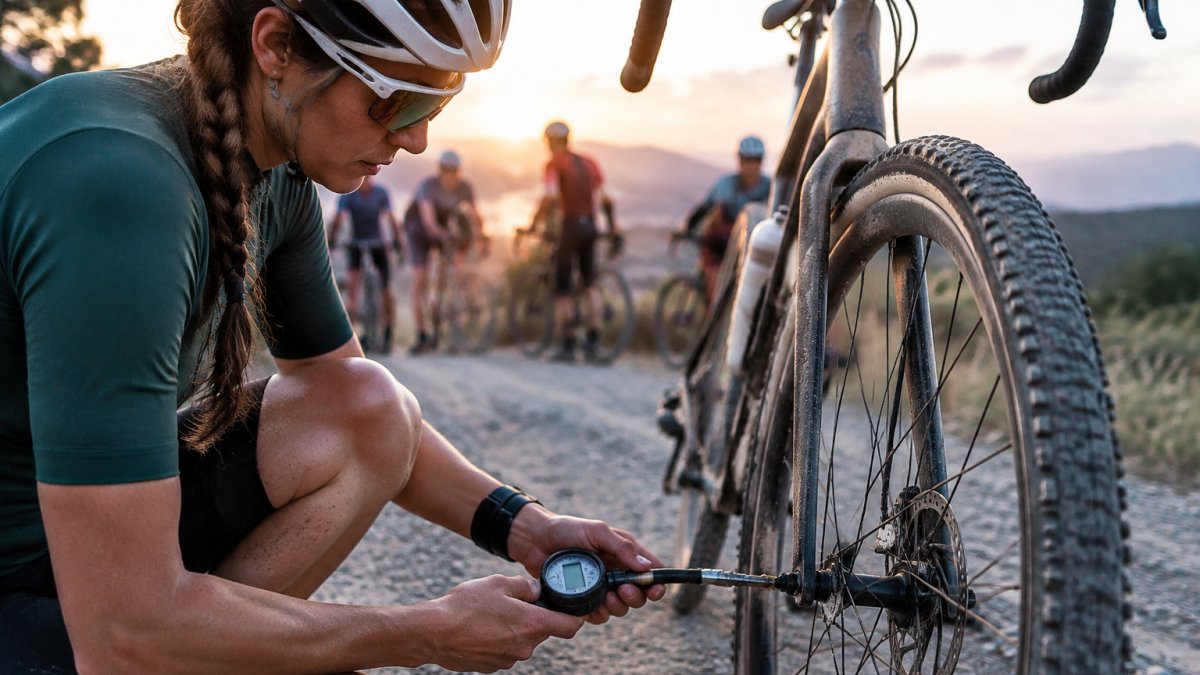
Watch out: running pressure too low is a common cause of race-ending problems. It feels great until a sharp rock causes a rim strike or a pinch puncture. If you are unsure, err slightly higher on rocky courses. For tubeless setup on carbon rims, our guide on how to install tubeless tires on carbon rims covers the steps that prevent burps and failures.
Building a Wheelset That Rewards Low Pressure
Wide internal rims can support the tyre sidewall, which may allow lower pressure without squirm or burping.
The 45 FWT wide carbon spoked gravel wheelset is built for riders who want an aero, wide rim and tyre combination at 34mm and up, with a light, stiff and fast feel. It pairs well with low-pressure, high-volume setups. If you want to understand why hand-built construction holds pressure and tubeless setups more reliably, our guide on the benefits of hand-built gravel wheelsets explains the difference.

The Berd Spoked Asymmetric 46 Gravel Wheelset at $2,950.00 uses Berd polymer spokes and an asymmetric rim to balance spoke tension. The TiFi Polymer Spoked Gravel 45 at $2,990.00 uses TiFi polymer spokes, which damp vibration.
Frequently Asked Questions
What tyre pressure should I run for tubeless gravel racing?
Start from a pressure range suited to your weight, tyre width and rim, then adjust. Heavier riders generally need more air; lighter riders generally need less. Run lower pressure on loose or rough gravel and raise it for hardpack or tarmac sections. Always stay under the rim's maximum pressure and above the point where the tyre squirms or bottoms out on rim strikes.
Should tubeless gravel tyres run lower pressure than tyres with tubes?
Yes, tubeless setups can usually run lower pressure. A tubeless setup removes the pinch-flat risk that limits inner tubes, so the tyre can flex more over rough gravel without puncturing. That extra flex delivers more traction and comfort. The trade-off is that very low pressure increases the chance of a rim strike and burping the bead, so set a floor and check it against your rim width and system weight.
How do I know if my gravel tyre pressure is too low?
Three signs: the tyre bottoms out on square-edge hits (you feel or hear a rim strike), the bike feels vague and washes out in corners, or you see sealant weeping at the bead. If any appear, raise pressure in small steps and retest. Too low also raises rolling resistance on smooth surfaces because the tyre deforms excessively. Test on the terrain you race on, not on smooth road.
How does tyre width change the right pressure?
Wider tyres carry more air volume, so they need less pressure for the same load and comfort. Moving to a wider tyre generally allows a lower pressure. Internal rim width matters too: a wider rim supports the tyre sidewall better and lets you run slightly lower pressure without squirm. Check the rim's maximum pressure rating before you go anywhere near the top of the range.
Pressure is the cheapest speed you will ever find on a gravel bike, but only if your wheels can support it. STOXbyHand has over 12 years of experience building hand-built carbon wheelsets with custom spoke options, so we can match a build to your weight, your terrain and the pressure you actually want to run. Get started with STOXbyHand and ride a wheelset that rewards low pressure instead of fighting it.
