

Last Updated: November 5, 2026
Quick Summary
Most Australian home and contents policies do not cover bicycle wheel damage caused by riding, as crash damage is usually excluded. Theft from your home or damage from a fire or break-in is typically covered, but accidental damage often needs a paid add-on. Check your policy wording before claiming.
- Theft is normally a defined insured event, while accidental damage is often an optional paid extra.
- Portable contents cover can follow your bike away from home but rarely covers crash damage.
- Wear and tear, mechanical failure and gradual deterioration are standard exclusions on most policies.
- If the repair estimate sits below your excess, do not claim.
- Photograph the damaged wheel from multiple angles and keep proof of ownership before lodging.
Table of Contents
- Does Home and Contents Insurance Cover Bicycle Wheel Damage?
- Cover at Home Versus Away From Home: Where the Damage Happened Matters
- Accidental Damage vs Wear and Tear Bike: Which Category Your Wheel Damage Falls Into
- Policy Exclusions That Void Bicycle Wheel Damage Claims
- Specialist Bicycle Insurance Australia: When Home Cover Falls Short
- Carbon Wheelset Warranty Coverage and How It Interacts With Insurance
- Repair Cost Versus Excess: Deciding Whether to Claim
- Checking Your Policy and Preparing Your Claim
- Frequently Asked Questions
Does Home and Contents Insurance Cover Bicycle Wheel Damage?
Most Australian home and contents policies do not cover bicycle wheel damage caused by riding. The exact answer to "does home insurance cover bicycle wheel damage" depends on three things: how the damage happened, where it happened, and how your policy defines a bicycle.
Here is the short version. A wheel smashed in a crash while riding is usually excluded. A wheel stolen from your garage is usually covered. A wheel damaged by a fire or a break-in is usually covered.
Theft Versus Accidental Damage: Two Different Claims
Theft and accidental damage sit in completely different parts of your policy. Theft is normally a defined insured event.
Many home and contents policies list theft as a standard insured event.
Accidental damage is the harder one. Some policies offer it as a paid add-on. Others exclude it outright for bicycles. Check the product disclosure statement before you assume anything.
Cover at Home Versus Away From Home: Where the Damage Happened Matters
Location decides more claims than most riders realise.
Cover at home usually applies when your bike is stored at your address and damaged by an insured event.
Away-from-home cover is where it gets patchy. Portable contents cover can follow your bike when you ride, commute or travel.
Watch out: a wheel damaged in a crash while riding is rarely treated as an insured event, even with portable cover.
Accidental Damage vs Wear and Tear Bike: Which Category Your Wheel Damage Falls Into
Sorting your damage into the right category is the single most useful thing you can do before calling your insurer.
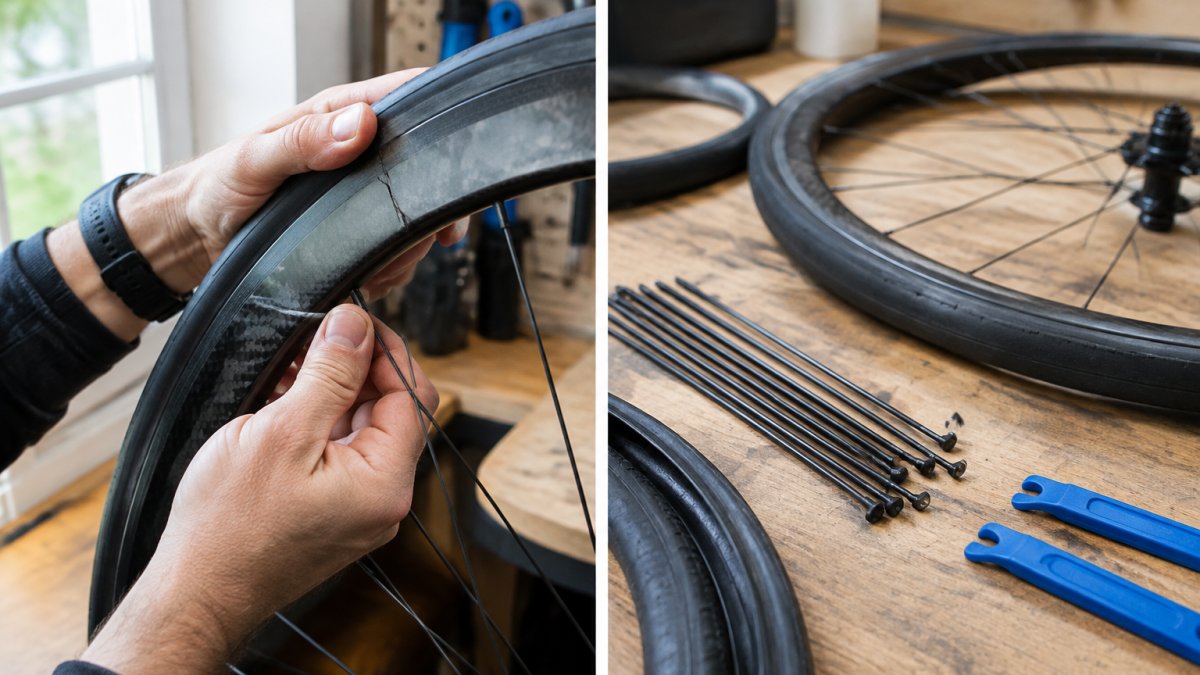
Accidental damage means a sudden, unintended event. A pothole strike that cracks a rim.
Wear and tear means gradual deterioration from normal use. Brake track wear on a rim-brake wheel.
Most policies exclude wear and tear, mechanical failure and gradual deterioration. That exclusion is standard, not sneaky.
If you need help judging which side of the line your damage sits on, our guide to identifying rim damage on carbon gravel wheels walks through what impact damage and wear damage actually look like.
A quick decision guide:
- Sudden impact, one event, you remember when it happened: accidental damage territory
- Cracks appearing over months, no single incident: wear and tear territory
- Damage during a crash while riding: usually excluded under a riding or racing exclusion
- Damage from a break-in or storm while stored: strongest claim position
Policy Exclusions That Void Bicycle Wheel Damage Claims
Exclusions are where most bicycle wheel damage claims fail, and the reason is usually specific rather than general.
Common exclusions on Australian home and contents policies, and how each one bites a wheel claim:
- Use while racing or competing: a wheel damaged in a criterium, gravel race or timed event is usually excluded even where accidental damage is otherwise included. Check whether the exclusion is worded as racing, competition or organised events, because the three can catch different rides.
- Damage caused by the rider: dropping the bike in the driveway, over-tightening a spoke nipple, or a botched home repair typically falls outside cover. Insurers treat this as user error rather than an insured event.
- Wear, tear, rust, corrosion and mechanical breakdown: brake track wear on a rim-brake wheel, fatigue cracks at spoke holes, seized freehub bearings and corroded nipples are all maintenance items, not claims. This exclusion is standard and is the single most common reason wheel claims are declined.
- Tyres and tubes: punctures and tyre damage are usually excluded outright, even where the wheel itself would be covered. A damaged tyre alone is rarely claimable.
- Business or delivery use: a bike used for courier work, food delivery or any paid riding usually falls outside home cover. If you ride for income, disclose it.
Sub-limits compound the problem.
Watch out: an exclusion can apply to the wheel even when the rest of the bike is covered.
For the full picture on what is and is not covered, read our carbon wheelset warranty coverage explained guide.
These are the exclusions that most often sink a bicycle wheel claim, and how each one applies.
| Exclusion | How it affects a wheel claim |
|---|---|
| Use while racing or competing | Wheel damaged in a criterium, gravel race or timed event usually excluded |
| Damage caused by the rider | Dropping the bike or a botched home repair falls outside cover |
| Wear, tear, rust, corrosion and mechanical breakdown | Maintenance items, not claims; most common reason claims are declined |
| Tyres and tubes | Punctures and tyre damage usually excluded outright |
| Business or delivery use | Courier work, food delivery or paid riding falls outside home cover |
| Theft without the required security | Unlocked garage or unattended wheel can void the claim entirely |
| Damage in transit | Car boot, roof rack or bike box may fall under a transit exclusion |
Specialist Bicycle Insurance Australia: When Home Cover Falls Short
Specialist bicycle cover exists because home policies were never built for riders.
What specialist policies usually do better:
- Cover the bike while riding, including crash damage
- Higher or no per-item sub-limits for bikes and wheels
- Cover for racing and events, often as an add-on
- New-for-old replacement rather than depreciated value
- Cover for accessories and components, including wheels
What they cost you is a separate premium. Whether that is worth it depends on your bike's value and how hard you ride.
If you are weighing up your options, our breakdown of bicycle insurance for carbon wheelsets covers what actually protects a wheelset and where home cover stops.
Carbon Wheelset Warranty Coverage and How It Interacts With Insurance
Carbon wheelset warranty coverage and insurance solve different problems, and riders often confuse them. That distinction also matters when a covered event damages the home itself, since homeowners insurance coverage may apply differently to a roof than to a bicycle wheel.
A typical carbon wheelset warranty covers defects in materials and workmanship for a set period. It does not cover crash damage, pothole strikes or wear.
Where they overlap, insurers usually want you to claim on the warranty first. Where they do not overlap, you can be left holding the full cost of a replacement rim or wheel.
A warranty is not crash insurance, so if you are buying premium carbon, budget for both.
Repair Cost Versus Excess: Deciding Whether to Claim
Run the numbers before you lodge. A claim that costs you more than a repair is a claim you should not make.
The calculation is simple:
- Get a written repair estimate from a wheel builder or bike shop
- Find your excess on the policy schedule
- Compare the two
- Add the future premium impact of making a claim
If the repair estimate sits below your excess, do not claim. You will pay the excess and still fund the repair yourself.
Also check the sum insured. If your wheelset is worth more than the per-item cap, the insurer pays the cap, not the replacement cost.
Once you decide to repair rather than claim, our step-by-step guide on shipping carbon wheels for repairs covers packing them safely and getting them to a builder without adding damage.
Checking Your Policy and Preparing Your Claim
Preparation wins claims, but the preparation has to match the cause of damage.
Start by sorting the damage into a cause, because the cause decides which part of the policy you are claiming under:
- Theft or break-in: claim under the theft insured event, and expect the insurer to check security and proof of ownership.
- Fire, storm, burst pipe or impact from a vehicle: claim under the listed insured event, and expect the insurer to check the date and circumstances.
- Sudden accidental damage at home: only claimable if accidental damage is included or added, and expect scrutiny of how the event happened.
- Crash while riding, wear and tear, or mechanical failure: usually excluded, so confirm before lodging rather than after.
Once you know the cause, work through this sequence:
- Read the policy wording and find the bicycle section, the per-item sub-limit and any bicycle cap.
- Confirm whether accidental damage is included or an add-on, and whether the cause you have identified is a listed insured event.
- Check the security requirements for stored bikes and whether your storage met them at the time.
- Photograph the damaged wheel from multiple angles, including the rim, spokes, hub and tyre, and photograph the intact wheel on the other side for comparison.
- Keep the purchase receipt or proof of ownership, and record serial numbers and hub details.
- Get a written repair or replacement estimate from a wheel builder or bike shop, itemised by component.
- Note the date, time and cause of damage in writing while it is fresh.
- Report any theft to police and keep the report number.
- Lodge the claim and keep a copy of everything you submitted.
Proof of ownership is where many claims stall. If you bought a custom wheelset, keep the invoice and any build specification.
A cause-of-damage decision guide helps here:
- Sudden impact, one event, you remember when it happened: accidental damage territory, if that cover is in place.
- Cracks appearing over months, no single incident: wear and tear territory, usually excluded.
- Damage during a crash while riding: usually excluded under a riding or racing exclusion.
- Damage from a break-in or storm while stored: strongest claim position.
Lodging a claim for an excluded cause can still affect your claims history and future premiums, so confirm eligibility before you submit.
For the legal side, the Australian Competition and Consumer Commission explains your rights under the Australian Consumer Law, which sit alongside any insurance policy.
Frequently Asked Questions
Does standard home and contents insurance cover accidental damage to bike wheels?
Only if you have added accidental damage cover to your policy. Standard home and contents insurance typically covers insured events such as fire, theft and malicious damage, but accidental damage such as hitting a pothole or dropping the wheel is usually an optional extra. Check your policy wording for the accidental damage benefit and any sub-limits that apply to bicycles before assuming you are covered.
Are carbon fibre wheels covered under standard home insurance policies?
Many standard policies treat high-value bicycles and components as specified items rather than general contents, so a carbon wheelset may need to be listed separately with its value. Some insurers also cap payouts for bicycles under portable contents cover. Confirm the per-item limit and whether your wheels need to be specified, and keep your purchase receipt and any carbon wheelset warranty coverage documentation on file.
How do I prove the value of a custom-built wheelset for an insurance claim?
Keep the original purchase receipt, the build specification sheet and photographs of the wheels before and after the damage. For a hand-built wheelset, a written quote from the builder for repair or replacement carries weight with assessors. Store these documents digitally so you can produce them quickly, and note the serial numbers on the rims and hubs where they exist.
Is my bicycle covered for damage while in transit?
Transit cover varies widely between policies. Some home and contents policies extend portable contents cover to bicycles in a vehicle or on a carrier, while others exclude damage that happens during transport unless it results from a collision covered by your car insurance. Read the transit and away-from-home sections of your policy wording, and check whether specialist bicycle insurance Australia options offer clearer transit protection.
Wheel damage is stressful enough without discovering your policy has a gap the day you need it. If you ride premium carbon, the smartest move is knowing exactly what your wheels are worth and what protects them. STOXbyHand builds hand-built carbon wheelsets for road, gravel and mountain riders, with over 12 years of experience and custom spoke options including carbon fibre, Berd and TiFi polymer. Get started with STOXbyHand and ride wheels built to survive the terrain you actually ride.
