

Last Updated: October 23, 2026
Quick Summary
Ship carbon wheels repairs safely by protecting the rim with at least 50 millimetres of closed-cell foam padding and multiple layers of bubble wrap, securing all components so nothing shifts inside the box, and choosing a carrier with a strong reputation for handling fragile goods. Document the wheel's condition with photos before packing and include a detailed repair request form with the shipment.
- Remove the tyre, cassette, rotor, and quick release before packing to reduce bulk and prevent damage.
- Use a double-wall corrugated wheel box at least 750 millimetres long and 250 millimetres deep with at least 50 millimetres of foam on all sides.
- Contact the repair shop first for their shipping address, preferred carrier, and turnaround time, which typically ranges from 5-10 business days for standard repairs.
- Declare the full replacement value of your wheels for insurance and keep your receipt and tracking number in case you need to file a claim.
- Label the box clearly with FRAGILE and THIS SIDE UP markings on at least two sides to ensure proper handling during transit.
Table of Contents
- Why Proper Packing Matters for Carbon Wheels
- How to Pack Bicycle Wheels for Shipping
- Choosing the Right Bicycle Wheel Shipping Box
- Shipping Wheels to a Bike Repair Shop
- How Long Does It Take to Ship a Wheel to a Repair Shop
- Insurance and Carrier Selection for Carbon Wheels
- Common Mistakes to Avoid When Shipping Carbon Wheels
- Frequently Asked Questions
Why Proper Packing Matters for Carbon Wheels
Proper ship carbon wheels repairs requires precision.
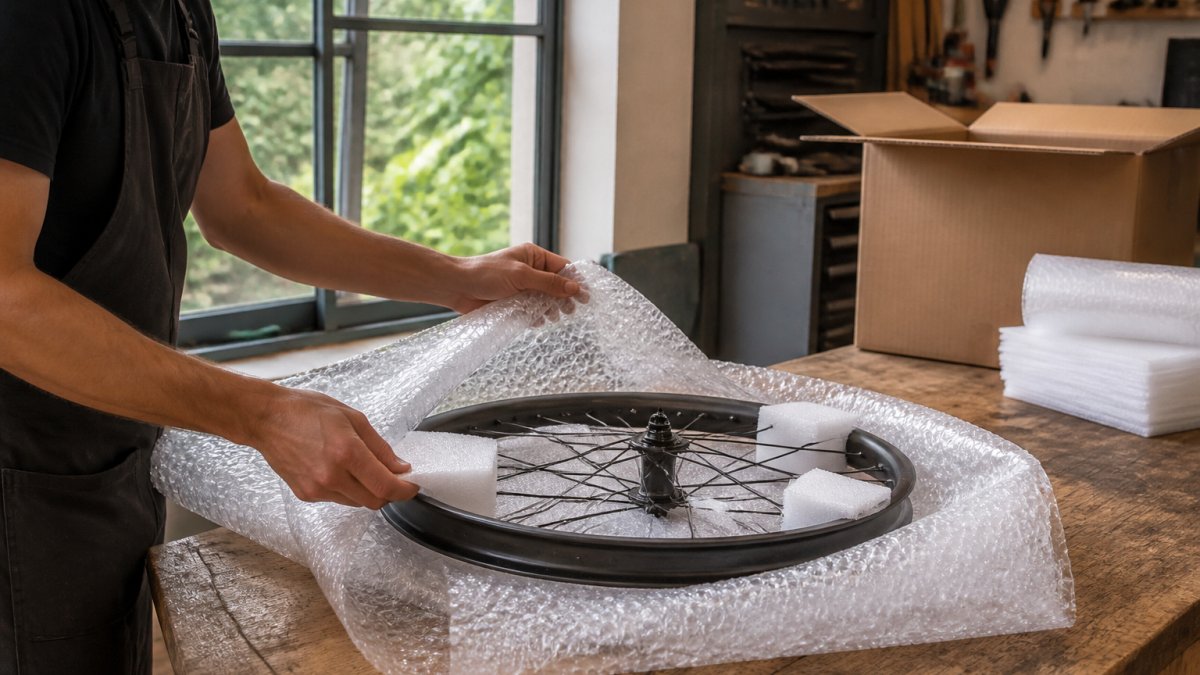
Carbon fibre is strong but brittle: it handles stress along its length but fractures under perpendicular impact.
That's preventable.
Safe arrival comes down to three things: knowing what to protect, using the right materials, and understanding how carriers handle packages.
Before you box anything up, learn how to identify rim damage on carbon gravel wheels so you know their condition before they leave.
How to Pack Bicycle Wheels for Shipping
Packing bicycle wheels for shipping starts with disassembly. Remove what can be removed. Secure what stays. Protect everything.
Disassemble and prepare your components
Start by taking off the tyre and inner tube. These add bulk and weight without needing protection.
Remove the cassette if shipping the rear wheel, using a cassette removal tool.
If the wheel has rim tape, check it. Damaged or peeling tape suggests moisture got inside.
Spin the wheel. Learn about bearing replacement as a common repair that may be needed when servicing wheels.
Protect the rim and carbon fibre surfaces
The rim is what you're protecting. Wrap it first.
Start with closed-cell foam padding around the entire rim, covering the braking surface and sidewalls.
Next, wrap the rim in large-bubble bubble wrap (10 millimetres), overlapping each layer by half for at least three full wraps.
For the spokes, cut foam noodles or pipe insulation to fit between spoke groups, preventing them from bending under pressure or puncturing the bubble wrap.
Wrap the hub with additional bubble wrap, its bearings can shift if compressed.
Secure the fork and frame
If you're shipping the fork or frame with the wheels, they need separate protection. Wrap the fork crown and dropouts with at least 25 millimetres of foam, these areas take impacts first. Wrap the frame's bottom bracket shell and chain stays with bubble wrap, since they contact the box bottom in transit.
Protect the rim and carbon fibre surfaces with multiple layers of padding and wrapping.
| Component | Protection Method | Minimum Thickness |
|---|---|---|
| Rim and braking surface | Closed-cell foam padding, then large-bubble bubble wrap | 50 millimetres foam |
| Spokes | Foam noodles or pipe insulation between spoke groups | As needed to fit |
| Hub | Additional bubble wrap | Not specified |
| Carbon fibre rims | Thin craft foam or closed-cell foam sheets | Not specified |
| Fork crown and dropouts | Foam wrapping | 25 millimetres |
| Frame bottom bracket and chain stays | Bubble wrap | Not specified |
Choosing the Right Bicycle Wheel Shipping Box
A standard bike box is too large for wheels alone. You need a wheel-specific box or a custom-sized carton, and you need to know the carrier's limits before you buy one.
Check carrier size and weight limits first
Australia Post and the major couriers publish maximum dimensions and weights for parcel post. A single padded wheel in a wheel box sits comfortably within standard limits, but a double-wheel box can push past the maximum length on some services.
Weigh the packed box too: carbon wheels are light, but foam, cardboard, and a cassette add up, and a fully padded double-wheel box can approach the upper end of standard parcel weights.
Pick the right box type
Wheel shipping boxes come in single-wheel and double-wheel sizes. For carbon wheels, the double-wheel box is safer because it distributes weight and prevents sliding. Shipping one wheel?
The box should be at least 750 millimetres long and 250 millimetres deep. Measure your wheel first. The box must be large enough that the wheel doesn't touch any side when padded.
Use double-wall corrugated cardboard at least 5 millimetres thick; single-wall cardboard crushes under handling pressure. If reusing a box, inspect it for crushed corners and water damage, and reinforce the base with an extra sheet of cardboard.
Materials checklist
Before you pack, gather:
- Double-wall corrugated wheel box or a reinforced bike box with internal dividers
- Closed-cell foam sheets, at least 50 millimetres thick for the base and sides
- Large-bubble bubble wrap (10 millimetres)
Build a foam nest so the wheel cannot move
Line the box bottom with 50 millimetres of foam, place the wheel on it, and fill gaps with more foam so no part of the wheel contacts the cardboard directly.
If you're using a standard bike box, reinforce it. Add internal cardboard dividers to create a wheel-sized chamber. Tape all seams with strong packaging tape.
Label the box clearly: "FRAGILE, CARBON WHEELS" on at least two sides. Mark the top and bottom. Add "THIS SIDE UP" arrows.
Shipping Wheels to a Bike Repair Shop
Sending wheels to a repair shop requires coordination. Don't just box them up and send them.
Coordinate with the repair expert before sending
Contact the repair shop first for their shipping address and preferred carrier, some have accounts with carriers offering better tracking. Ask about their intake process: do they photograph wheels on arrival or test them before starting? Provide your contact details and phone number in case something's unclear. Ask about turnaround time: most shops take 5-10 business days for standard repairs, and carbon-specific work may take longer if parts need ordering.
Document damage and include repair instructions
Before packing, photograph the wheel from multiple angles. Take close-ups of any visible damage, cracks, dents, flat spots, or discolouration.
Write a repair request form. Include:
- Your name and contact details
- Wheel size and type (road, gravel, mountain)
- Current issue (brake rub, wobble, noise, visible damage)
Print this form and tape it to the inside of the box lid. Also email a copy to the shop before you ship.
Include a packing list. List everything in the box: wheel, cassette, rotor, quick release, brake pads (if any), and any other components.
How Long Does It Take to Ship a Wheel to a Repair Shop
Shipping time depends on your location, the carrier, and whether the wheel crosses a border. Build the timeline from four parts: outbound transit, intake and inspection, repair time, and return transit.
Domestic shipments
Standard parcel post typically takes a few business days between major centres, and express is faster. Add one to two business days for the shop to receive, inspect, and log your wheel. Repair time varies: a simple true takes one to two days, spoke replacement two to three days, hub bearing service three to five days, and parts orders add five to ten business days.
International repair shipments
Sending a wheel across a border adds steps that domestic shipments do not have. Plan for customs clearance, duties and taxes, and extra documentation.
Duties and taxes. Goods sent for repair may attract duties or taxes on entry, depending on the destination's rules and whether the item is returned after repair.
Documentation. Include a commercial invoice or pro-forma invoice, a repair request form, and a packing list, and keep copies.
Transit time. International transit commonly runs one to three weeks depending on service and clearance, but customs can add days or longer. Build in a buffer and don't book a repair around a tight deadline.
Track and share the number
Track your shipment. Most carriers provide tracking numbers. Share this number with the repair shop so they can flag your package on arrival, and keep the receipt and tracking details in case you need to make a claim.
Australia Post parcel size and weight limits
Insurance and Carrier Selection for Carbon Wheels
Carbon wheels are expensive. Insure them.
Most standard shipping insurance covers damage up to a declared value.
Some carriers offer "signature required" delivery.
Choose a carrier with a strong reputation for handling fragile goods. Major carriers have fragile-goods programs.
Keep your receipt and tracking number. If the wheel arrives damaged, you'll need these to file a claim.
Review the warranty coverage for your carbon wheelset to understand what damage is covered by the manufacturer versus what's a shipping responsibility.
Consider purchasing additional coverage from the carrier if the wheel value exceeds standard limits.
Common Mistakes to Avoid When Shipping Carbon Wheels
Using duct tape on carbon. Duct tape residue damages carbon finish.
Overpacking the box. Compressed padding loses shock absorption.
Shipping without documentation. Photos and repair notes prevent misunderstandings. Include them.
Not labelling the box clearly. "FRAGILE" labels matter.
Choosing the cheapest carrier. Budget carriers handle packages roughly.
Forgetting to declare value. Undeclared value means underpaid insurance.
Not contacting the repair shop first. Some shops have specific requirements.
Proper ship carbon wheels repairs safely comes down to three steps: protect the rim with layered padding, secure all components so nothing shifts, and choose a carrier that handles fragile goods. Document everything before you pack, photos and repair notes prevent mistakes at the shop.
At STOXbyHand, we recommend having a trusted repair shop relationship before you need it, when your hand-built carbon wheels need service, you want someone who understands what they're working with. Explore our carbon fibre wheel maintenance guide to learn how proper care extends the life of your wheelset and reduces the need for repairs in the first place.
Frequently Asked Questions
Should I remove the tyres, cassette and rotors before shipping carbon wheels?
Yes. Remove tyres, cassette, and rotors to reduce weight and protect these components from damage during transit. Tyres can puncture under pressure, and rotors can bend if the wheel shifts inside the box. Wrap the hub and bearings separately with foam padding. Pack removed components in a smaller box inside the main shipment to prevent them rolling loose. This approach also reduces overall shipping cost and makes the wheel easier for the repair shop to handle upon arrival.
How do I protect carbon rims from impact during transit?
Carbon rims are susceptible to impact damage that can cause hairline cracks. Wrap the rim first with 50mm foam pipe insulation, then add two layers of bubble wrap secured with masking tape. Pay special attention to the rim brake track and any existing damage. Create a cardboard spacer inside the box to prevent the wheel from shifting. For wheels with carbon spokes, ensure spoke tension remains stable by supporting the hub with additional foam. Consider purchasing rim-specific protective sleeves designed for carbon fibre wheels if shipping internationally.
How long does it take to ship a wheel to a repair shop?
Domestic shipping within Australia typically takes 3-5 business days via standard courier. Express services reduce this to 1-2 business days but cost more. Once the wheel arrives at the repair shop, assessment takes 1-2 days, and actual repair time varies from 3-14 days depending on damage severity. International shipments to overseas repair specialists take 7-14 days plus customs clearance. Factor in return shipping for the repaired wheel, which adds another 3-5 days domestically. Total turnaround from dispatch to receiving the repaired wheel is usually 2-4 weeks for domestic repairs.
Should I insure carbon wheels when shipping them for repair?
Yes, insurance is strongly recommended for high-value carbon wheels. Standard courier coverage often limits liability to a low amount per kilogram. Declare the replacement value of your wheelset to the courier and purchase additional declared value coverage. For high-value wheels, consider specialist bike shipping insurance that covers impact damage and loss. Document the wheel's condition with photos before dispatch and include them with your shipment paperwork. Keep proof of insurance and all courier receipts until the repair shop confirms receipt and condition.
