

Table of Contents
- Carbon Fiber Durability for Gravel Riding: The Verdict
- Carbon vs Alloy Gravel Wheels: Where Each Material Wins
- Carbon Wheel Impact Resistance: What Rock Strikes Actually Do
- Carbon Wheel Inspection After a Crash: A Step-by-Step Check
- Gravel Wheel Tyre Pressure: The Setting That Protects Your Rims
- Durability by Component: Frame, Fork, Wheels, and Cockpit
- Which Carbon Gravel Wheelset Suits Your Riding?
- Conclusion: Matching Carbon to Your Gravel Reality
- Frequently Asked Questions
Last Updated: October 7, 2026
Carbon Fiber Durability for Gravel Riding: The Verdict
Yes, the question of is carbon fiber durable for gravel riding is answered by whether the wheelset is built for the loads and the rider understands how the material fails.
Whether is carbon fiber durable for gravel riding depends on the layup and resin system rather than the fibre alone, since carbon fiber is a composite of fibres set in resin.
Carbon vs Alloy Gravel Wheels: Where Each Material Wins
Alloy wins on impact forgiveness and cheap replacement; carbon wins on weight, fatigue life and vibration damping.
An aluminium rim bends and dents under a hard hit, which often means a true and carry on. A carbon rim absorbs the same hit and either survives intact or fails at the point of impact.
Fatigue Life: Why Carbon Usually Outlasts Alloy
Fatigue is the slow accumulation of damage from repeated loads, and it is the main reason alloy wheels eventually fail.
Carbon fibre composites behave differently. A well-made carbon rim can be designed so the fibres carry load within their elastic range, enduring very high cycle counts without the same progressive weakening.
On maintained roads and light singletrack, fatigue life favours carbon. Under repeated hard rock strikes and loaded touring, impact tolerance and repairability matter more.
Impact Tolerance: Dents Versus Cracks
An aluminium rim deforms plastically. A square-edge hit can dent the sidewall or bend the rim bed, but the material usually stays together.
A carbon rim is elastic up to a point, then it fractures.
Carbon durability is not a single number. It depends on where the strike lands, rim width, tyre cushioning, and how the layup distributes load around the spoke holes and bead area.
Repairability and Crash Replacement Costs
Alloy rims can sometimes be bent back, though a repaired rim is rarely as strong as new and the bead seat may never seal reliably again. Carbon generally cannot be repaired safely at the rim edge, so replacement is the realistic path.
This is where crash replacement programs matter more than the material itself: a policy turns a bad day into a manageable cost, and often decides whether a rider stays on carbon.
Stiffness, Ride Feel, and Vibration Damping
Carbon fibre layup lets a rim be tuned directionally: laterally stiff for cornering and sprinting, yet vertically compliant to take the edge off rough gravel.
Ride feel is not purely material, though. Tyre width, pressure, spoke count and spoke type all change how a wheel feels and survives impacts, a wide carbon rim at the right pressure can feel smoother and last longer than a narrow alloy rim run too hard.
A Practical Comparison
| Factor | Carbon Rim | Alloy Rim |
|---|---|---|
| Weight | Lighter | Heavier |
| Fatigue life | Very high | Lower |
| Impact behaviour | Holds or cracks | Dents, often rideable |
| Repair | Replacement | Sometimes bent back |
| Vibration damping | Better | Harsher |
| Cost | Higher | Lower |
| Best for | Long-distance comfort, fatigue resistance | Cheap replacement, impact forgiveness |
What This Means for Gravel Riding
Gravel surfaces are loose, sharp and unpredictable, so impact damage is a real risk for any material.
On mixed smooth gravel and rough singletrack, carbon's fatigue life and damping usually win. Heavily loaded riding with repeated square edges may suit alloy's forgiveness and low replacement cost better. Neither material is universally durable; design, build quality and riding conditions decide the outcome.
Carbon Wheel Impact Resistance: What Rock Strikes Actually Do
Carbon wheel impact resistance depends on where the strike lands. A glancing hit on the rim bed usually does nothing; a square-edge strike on the sidewall or bead hook causes damage because the load concentrates in a small area.
Modern gravel rims use wider profiles and hookless or hooked beads designed to spread that load. The wider the rim, the more the tyre absorbs before the rim sees anything.
How Carbon Layup and Rim Construction Handle Rough Terrain
Carbon layup, the arrangement of fibre sheets and bonding resin, decides how a rim behaves under impact. Extra material at the spoke holes and bead area adds strength where strikes happen, and filament wound construction, used on our TiFi Polymer Spoked Gravel Max, wraps continuous fibre for a very even structure.

Carbon Wheel Inspection After a Crash: A Step-by-Step Check
Inspect a carbon wheel after any significant strike before you ride again. Most damage is visible if you know where to look; the harder skill is telling cosmetic marks from structural damage. Do this check on the spot, then repeat it in good light at home.
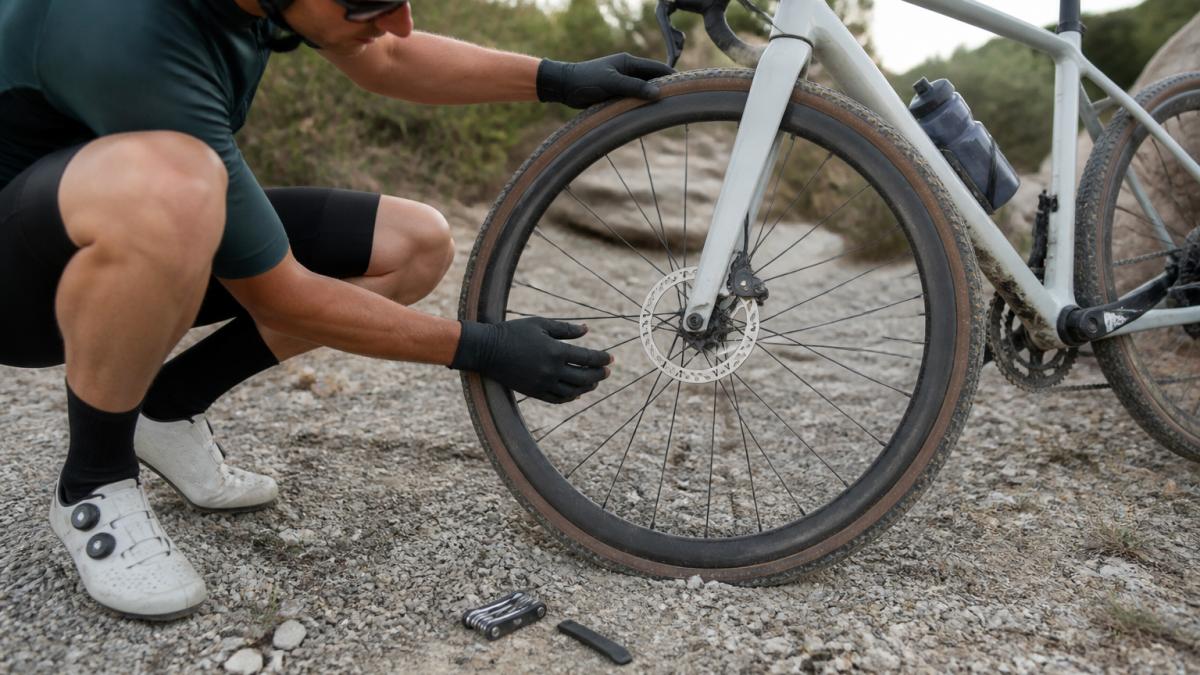
The On-the-Spot Check
- Spin the wheel and watch the rim edge for any wobble or hop
- Run a thumb and forefinger along both bead edges, feeling for cracks, soft spots or lifted fibre
- Check the rim bed inside the tyre for cracks around the spoke holes
What Different Damage Signs Actually Mean
Cosmetic scuffs and paint chips. A scuff on the clear coat or small paint chip is usually cosmetic.
White or cloudy marks. These often indicate resin damage beneath the surface.
Soft spots. Press gently along the rim.
Visible cracks. A crack in the rim bed, bead hook or sidewall is a structural failure.
Berd Spoked Asymmetric 46 Gravel Wheelset 1260g →
Lifted fibre or frayed edges. Visible or loose fibres mean the resin has failed locally.
When to Stop Riding and Seek Professional Assessment
- A visible crack anywhere on the rim
- A soft or spongy area
- Lifted or frayed fibre
A cracked rim can fail completely without warning, and failure at speed on gravel is a serious safety risk. If unsure, treat the wheel as damaged until a professional confirms otherwise.
How to Reduce the Risk Before It Happens
Run enough pressure to prevent the tyre bottoming out on the rim. Our Core Gravel 35 rims carry a maximum tyre pressure of 65 psi, so there is headroom for road sections without risking the bead.
Use a wider rim where possible: a 26mm internal width rim running a 45mm tyre has more cushioning than a narrow road rim, reducing the peak load a rock strike puts into the rim.
Check your tyres for cuts and worn sidewalls. A tyre that bottoms out easily transfers every hit straight to the rim.
After the Inspection
If the wheel passes inspection, re-check spoke tension and trueness after your next ride. Some damage only shows up under load.
If the wheel fails inspection, contact the manufacturer or a qualified wheel builder. If you have a crash replacement program, use it.
The goal is not to baby a carbon wheel, but to know what you are looking at so you can make a safe decision quickly.
Gravel Wheel Tyre Pressure: The Setting That Protects Your Rims
Gravel wheel tyre pressure is the most effective protection against rim damage. Too high and the tyre transmits every hit straight to the rim; too low and the tyre bottoms out, so the rim takes the strike directly.
A sensible starting range for a 45mm gravel tyre is roughly 1.7 to 2.4 bar (25 to 35 psi), adjusted for rider weight, tyre width and terrain.
Durability by Component: Frame, Fork, Wheels, and Cockpit
Durability is not one number. Each component on a gravel bike sees different loads, and carbon performs differently in each.
Frames and forks are generally very durable in carbon, because tube shapes and layups are designed for the loads they meet. Wheels take the most abuse, meeting every rock and pothole directly.
For wheels, spoke choice changes durability as much as the rim does. Berd polymer spokes have improved fatigue life over steel and are impervious to the elements, while TiFi polymer spokes use 6Al-4V titanium ends with aramid fibre, giving 52% more elasticity than a steel spoke.

Which Carbon Gravel Wheelset Suits Your Riding?
Match the wheelset to your terrain and weight, not the lowest weight figure on a spec sheet. Here are our four gravel builds and who each suits.
| Wheelset | Weight | Price | Best For |
|---|---|---|---|
| Berd Spoked Asymmetric 46 | 1290g | $2,950 | All-round gravel, max comfort |
| TiFi Polymer Spoked Gravel 45 | 1190g | $2,990 | Fast gravel, lightest build |
| TiFi Polymer Spoked Gravel Max | 1190g | $3,290 | Aero gravel racing |
| Core Gravel 35 | 1440g | $1,790 | Value, heavy riders, rough terrain |
The TiFi Polymer Spoked Gravel 45 is our lightest at 1190g, with a 45mm rim and 32mm internal width.

The Core Gravel 35 is the one we point heavier and aggressive-terrain riders toward.
Conclusion: Matching Carbon to Your Gravel Reality
Carbon fiber is durable for gravel riding when the rim is built for the load, the pressure is set for the terrain, and you inspect the wheel after a hard hit.
At STOXbyHand, every wheelset is hand-built and custom-configured to your weight, terrain and riding style, with spoke options including Berd and TiFi polymer.
Get started with STOXbyHand and ride gravel on a wheelset built to survive it.
Frequently Asked Questions
Is carbon fibre durable enough for gravel riding?
Yes, when it is built for the purpose. Carbon fiber durability depends on the layup and rim construction, not the material alone. A well-made carbon gravel rim absorbs vibration and resists fatigue better than alloy in normal riding. The weakness is sharp, concentrated impacts, such as a rock strike on an exposed rim edge. Choose a wheelset with an impact-resistant profile and run sensible tyre pressures, and carbon will handle gravel roads, light singletrack, and rough terrain for years.
Are carbon gravel wheels more likely to crack than alloy wheels?
Not in normal use. Alloy rims dent and bend on harsh impacts, while carbon tends to crack only when a strike concentrates force on a small area. Alloy damage is often visible immediately; carbon damage can be internal and hidden. This is why carbon wheel inspection after a crash matters. A carbon rim that passes a thorough check, including spoke tension and rim trueness, is generally safe to keep riding. Alloy wheels are easier to replace cheaply, but they also fatigue faster over repeated rough-terrain loads.
Can carbon wheels handle rough gravel roads and impacts?
They can, provided the rim is designed for it. Impact resistance comes down to carbon layup, rim profile, and how the wheel is built. Wider internal widths and hookless or hooked designs spread impact loads more evenly. Tyre pressure also plays a role: running gravel wheel tyre pressure too high transfers more force into the rim on rock strikes. A hand-built wheelset with balanced spoke tension adds another layer of durability by distributing load across the whole wheel rather than a single point.
How can you check carbon wheels for damage after a crash?
Start with a visual scan of the rim bed, sidewalls, and spoke holes for cracks, white stress marks, or soft spots. Spin the wheel and check for trueness and wobble. Squeeze pairs of spokes to feel for uneven tension, which can signal a damaged rim or nipple. Run a fingernail along the rim edge to catch delamination. If you find anything suspicious, stop riding and have the wheel inspected by a qualified builder. Carbon wheel inspection after a crash is not optional if you want to avoid a failure mid-ride.
Are carbon gravel wheels repairable if they crack?
Some carbon rims can be repaired by specialists, but structural repairs are not always cost-effective or safe for high-load areas. Most brands offer crash replacement programs instead. STOXbyHand, for example, offers a 3-year warranty on manufacturing defects and crash replacement at a discount on the Core Gravel 35 Wheelset. If you crack a rim, check your warranty terms before assuming you need a full new wheelset. Repairability varies by damage location: a crack near a spoke hole is usually worse than one on an outer edge.