

Table of Contents
- How Rim Shape and Depth Influence Aerodynamic Performance
- Deep-Section Carbon Wheels and Drag Reduction
- Carbon vs Alloy Wheels: Material Impact on Speed
- Rim Depth and Aerodynamics: Finding Your Sweet Spot
- Tyre Width and Rim Shape: The Critical Interaction
- Carbon Spoke Design and Power Transfer Efficiency
- Real-World Speed Gains and When They Matter
- Frequently Asked Questions
Last Updated: October 12, 2026
How Rim Shape and Depth Influence Aerodynamic Performance
Aerodynamic drag is the sum of pressure drag (resistance from the low-pressure wake behind the wheel) and skin friction (air rubbing along the rim surface), and carbon wheels aerodynamic performance depends on managing both forces. At cycling speeds, pressure drag dominates, and it depends almost entirely on how airflow leaves the rim.
When air hits the leading edge of a rim, it accelerates around the tyre and rim profile. On a shallow, round-profile rim, the air separates past a certain point, creating a large low-pressure zone behind the wheel.
Rim depth matters because it increases chord length, the distance air travels along the rim before the trailing edge, giving the boundary layer more time to stay attached.
Yaw angle, the angle between oncoming wind and direction of travel, changes everything. At zero yaw, a deep rim is most efficient. At 10-15 degrees, common in real riding, the profile must manage crossflow as well as forward flow.
Why deeper rims cut through air resistance
Deep-section rims reduce drag by controlling the pressure gradient along the rim surface. On a well-shaped deep rim, air accelerates smoothly over the leading portion and decelerates gradually toward the trailing edge, keeping the boundary layer attached and minimising the wake.
The effect is measurable in a wind tunnel: a 50mm deep rim typically produces significantly less drag than a 30mm rim at the same yaw angle, and the gap grows with speed because drag scales with the square of velocity.
The difference between a 45mm and a 55mm rear rim shows real-world gains in rolling speed on flat terrain: riders do not work harder, the wheel simply maintains momentum better because it fights less air resistance. The key is tuning the profile for the yaw angles riders actually experience, not just a wind-tunnel zero-yaw condition.
The trade-off appears in crosswinds. A very deep rim acts like a sail, catching sideways wind and pushing the wheel off line, so profile design becomes critical.
Wave-shaped rims and crosswind stability
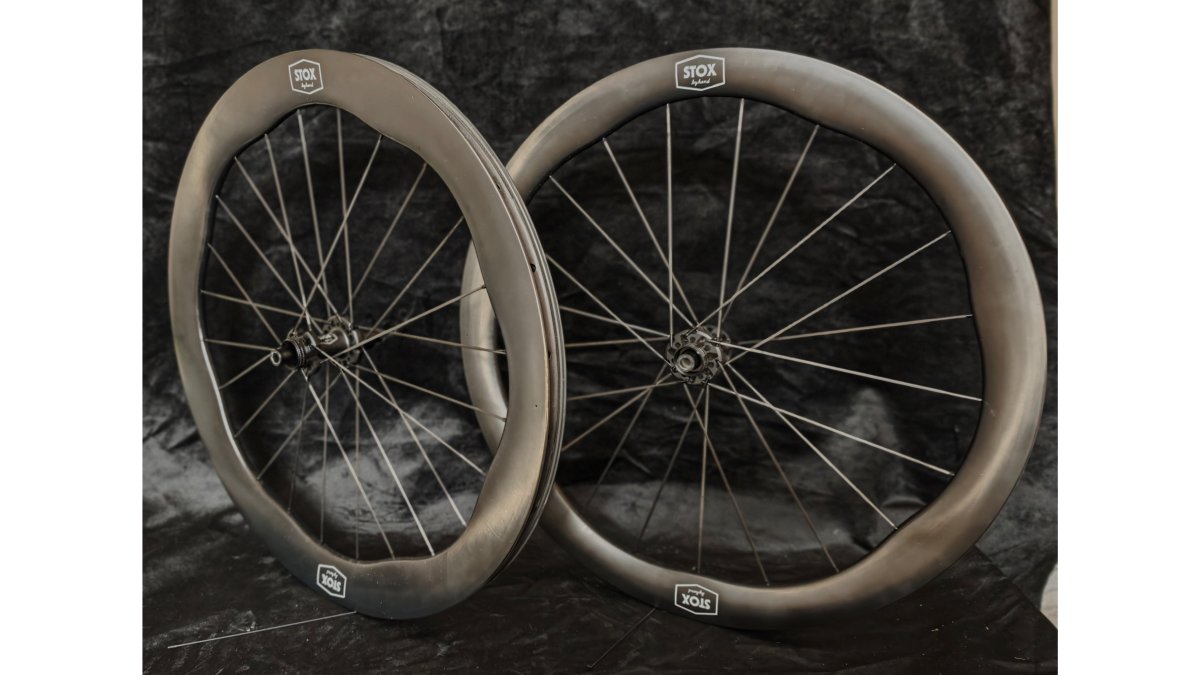
Wave-shaped rim profiles solve the crosswind problem without sacrificing aerodynamic depth. Instead of a uniform curve from spoke bed to rim tip, a wave profile features subtle undulations that release pressure gradually rather than letting it build up suddenly.
The mechanism is about managing the centre of pressure. On a conventional deep rim, crosswind side force acts at a single point, creating a lever arm that twists the wheel. On a wave-profile rim, the varying depth along the circumference shifts the centre of pressure as the wheel rotates, spreading steering torque over a longer arc. The rider feels a gentle push rather than a sharp tug.
This design philosophy underpins models like the STOXbyHand Wave CS 4565, which combines a 45/55mm depth profile with a wave shape tuned for stability. Riders report noticeably better control in windy conditions without losing the aerodynamic benefits of the deep section, the wave is a functional geometry that balances speed and handling, not a marketing term.

Deep-Section Carbon Wheels and Drag Reduction
Deep-section carbon wheels aerodynamic design reduces drag through rim depth, profile shape, and material properties. The extended surface area of a deep carbon rim lets engineers control pressure distribution more precisely. Carbon construction, typically high-modulus carbon fibre, creates a stiffer rim that maintains its aerodynamic profile under load, whereas alloy rims can flex slightly and lose their shape.
The drag reduction translates into real speed gains, though the magnitude depends on conditions. On a flat time trial course with minimal wind, a deep-section carbon wheelset can save 20-40 seconds over 40 kilometres versus standard shallow rims. In rolling terrain or crosswinds, gains diminish because you are not maintaining constant high speed, the advantage matters most at a consistent power output.
Carbon vs Alloy Wheels: Material Impact on Speed
Carbon fibre and aluminium alloy respond differently to aerodynamic design. Alloy rims are stiffer but heavier, and their material properties limit how thin the rim wall can be without sacrificing strength, so they tend to be thicker, which increases drag. Carbon fibre allows thinner rim walls with internal reinforcement, producing a more aerodynamically optimised shape at lower weight.

Carbon fibre's strength-to-weight ratio is where the material advantage becomes clear. A carbon rim can be lighter than an alloy equivalent while matching or exceeding its stiffness. This matters for power transfer: less lateral flex when sprinting or climbing out of the saddle means more effort translates into forward motion rather than bending the wheel.
Carbon also allows internal moulding techniques, like EPS internal moulding used in some STOXbyHand wheels, creating structures optimised for both aerodynamics and structural integrity. Alloy rims cannot achieve this internal reinforcement, so they rely on external thickness for similar stiffness, and that thickness increases drag.
Rim Depth and Aerodynamics: Finding Your Sweet Spot
Not every rider needs a 60mm deep-section rim. Optimal depth depends on weight, power output, and typical conditions. Lighter riders under 70 kilograms benefit from shallower, lighter rims: fewer crosswind stability issues, and weight savings matter more for climbing. Heavier riders and high-power riders benefit from deeper rims because they have the mass and strength to handle the profile without fighting crosswind instability. Understanding these structural trade-offs mirrors the engineering principles behind wind load effects on vertical supports, where surface area dictates how a structure manages external forces.
A 45/50mm depth strikes a balance for most road cyclists, delivering meaningful aerodynamic gains on flat terrain without handling compromises in variable wind. For time trial racing on courses with minimal turning, 55/65mm depths make sense. For gravel and mixed terrain, shallower rims (35/40mm) are preferable, lighter and more responsive to direction changes.
Tyre Width and Rim Shape: The Critical Interaction
Rim aerodynamics depend entirely on the tyre you run. A narrow 23mm tyre on a 30mm internal-width rim creates a sharp transition that disrupts airflow, and a 28mm tyre on a 25mm internal rim is mismatched and creates turbulence. The ideal setup pairs rim internal width with a tyre that creates a smooth, continuous profile from rim edge to tyre shoulder.
Modern carbon rims are optimised for specific tyre widths. The Carbon Spoked 5031, with its 31mm internal width, is designed for 30mm tyres, creating an aerodynamically optimised profile where the tyre shoulder aligns smoothly with the rim edge. Running a 28mm tyre on this rim wastes the aerodynamic benefit because the profile becomes irregular.
Tyre width also affects rolling resistance and ride quality. Wider tyres (28-32mm) roll faster on rough surfaces because they deform to absorb vibration without losing speed; narrower tyres (23-25mm) are lighter but transfer more road texture to the frame. The aerodynamic rim design only delivers its full benefit when paired with a complementary tyre.
Carbon Spoke Design and Power Transfer Efficiency
Carbon spokes reduce rotational weight and increase lateral stiffness versus traditional steel spokes. A lighter wheel accelerates faster and requires less energy to maintain speed, and carbon spokes allow higher spoke tension without added weight, improving power transfer by reducing lateral flex during hard efforts.
The engineering matters here: a carbon spoke with a poor nipple interface will slip or crack under load. STOXbyHand uses a taper-lock interface between the carbon spoke and alloy nipple.
The difference in power transfer is tangible for riders who sprint hard or climb out of the saddle. With steel spokes, some lateral flex is inevitable, and that deformation absorbs energy. Carbon spokes reduce this flex significantly, so more power goes into acceleration rather than wheel deformation, noticeably snappier acceleration for riders producing high wattage.
Real-World Speed Gains and When They Matter
The aerodynamic advantage of carbon wheels is real but context-dependent. To judge whether a claimed gain applies to you, you need the test conditions: rider power, speed, yaw angle, tyre width, and the baseline wheel. Without those, a time saving is just a number.
In controlled testing, a deep-section carbon wheelset typically saves roughly 20-40 seconds over 40 kilometres versus a shallow alloy wheelset when the rider holds a constant 250 watts on a flat course with minimal wind.
These figures assume the same tyre, tyre pressure, and rider position.
On a hilly course with frequent direction changes, the advantage shrinks to 10-20 seconds over 40 kilometres because you are not sustaining high speed long enough for aerodynamics to compound. On a steep climb, the aerodynamic benefit is minimal, speed is low, so drag is low.
In crosswinds, aerodynamic advantage can reverse into disadvantage if the rim is not designed for stability. A poorly shaped deep rim costs time and control in gusty wind; a well-designed wave-profile rim like the STOXbyHand Wave CS 4565 maintains aerodynamic benefit while staying stable, so you do not lose speed fighting the wheel.
The speed gains matter most for time triallists, triathletes, and riders who spend significant time at high speed on relatively flat terrain. For general road riding with varied terrain and wind, gains are real but modest, typically 2-5% faster rolling speed in ideal conditions, less in real-world variability.
Frequently Asked Questions
Are deeper carbon wheels more aerodynamic?
Yes. Deeper rims reduce drag by streamlining airflow around the wheel. A 50mm rim cuts air resistance more effectively than a 35mm rim, but the gain depends on yaw angle and crosswind conditions. Extremely deep rims (65mm+) can become unstable in strong crosswinds. The sweet spot for most riders is 45-55mm, which balances aerodynamic efficiency with handling predictability.
What is the difference between carbon wheels and alloy wheels for aerodynamics?
Carbon wheels achieve superior aerodynamic shape through moulding, allowing complex rim profiles like wave designs that reduce drag. Alloy wheels are limited to simpler shapes. Carbon also allows deeper sections without excessive weight. The real advantage is shape precision and the ability to optimise rim-tyre interaction. Carbon spokes add lateral stiffness, improving power transfer without added weight.
How does tyre width affect rim aerodynamics?
Tyre width and rim width must match for optimal aerodynamics. A 30mm tyre on a 31mm internal rim width creates the smoothest airflow transition. Mismatched combinations (narrow tyre on wide rim, or vice versa) create turbulence and drag. Wider tyres (32-34mm) are increasingly common for gravel and rough roads; ensure your rim is designed for that width to maintain aerodynamic benefit.
Do carbon wheels actually make a bike faster in real riding?
Speed gains from aerodynamic wheels depend on your power output and course. On flat terrain at high speed (35+ km/h), a 50mm carbon wheel can save 10-20 watts compared to a shallow rim. On rolling terrain or in crosswinds, gains are smaller. For climbers, weight matters more than aerodynamics. The real difference appears in time trials and long road races where sustained speed is the goal. Hand-built wheels with precise spoke tension and alignment also improve power transfer and handling consistency.