

Table of Contents
- Why Cyclists Choose Hunt Bike Wheels Alternatives
- What to Look for in Road Bike Wheels and Gravel Wheelsets
- Hand-Built Carbon Wheelset Benefits Over Factory Production
- Carbon vs Steel Spokes for Gravel: Which Performs Better
- Durable Carbon Gravel Wheelset for Racing: Top Alternatives
- Warranty, Durability, and Long-Term Serviceability
- Frequently Asked Questions
Last Updated: August 31, 2026
Why Cyclists Choose Hunt Bike Wheels Alternatives
Hunt Bike Wheels are competitively priced and widely available, but many serious cyclists, especially gravel racers and endurance athletes, are exploring alternatives. The difference often comes down to customisation, material science, and hand-building philosophy.
STOXbyHand has spent over 12 years refining hand-built carbon wheelsets for riders who demand more than off-the-shelf solutions. Factory-produced wheels are designed to serve the broadest market and cannot account for your specific weight, riding style, terrain preference, or bike geometry. Hand-built alternatives address these gaps directly. Riders now expect wheels that perform across multiple disciplines: road speed, gravel durability, and vibration absorption for wider tyres at lower pressures. Advanced spoke materials like TiFi polymer and Berd polymer, combined with asymmetric rim profiles and precision hand-building, deliver performance characteristics that factory wheels cannot match.

What to Look for in Road Bike Wheels and Gravel Wheelsets
Choosing the right wheelset requires understanding specifications that actually matter for your riding. Too many cyclists focus on weight alone and miss the mechanical realities that determine performance under load.
Rim Depth, Width, and Aerodynamic Profile
Rim depth and width are the primary aerodynamic factors influencing how a wheel cuts through air. Deeper rims (35-50mm) are more aerodynamic but heavier and more affected by crosswinds. For gravel racing, 35-50mm rim depth strikes the right balance between efficiency and handling.
Internal rim width (typically 26-32mm) matters as much as external width. Wider internal width allows you to run wider tyres at lower pressures without excessive bulging. Lower pressure increases compliance, reducing vibration and improving traction on rough terrain.
Asymmetric rim profiles, where front and rear rims have different dimensions, are becoming standard in gravel wheelsets. On a rear disc wheel, the drive side and non-drive side experience different spoke bracing angles, creating uneven spoke tension. An asymmetric profile evens out those tensions, improving durability and reducing spoke breakage. The Berd Spoked Asymmetric 46 balances spoke tension between the 70kgf (non-drive) and drive sides, resulting in a wheel that handles rough terrain without sacrificing stiffness.

Spoke Count, Lacing Pattern, and Engagement Points
Spoke count directly influences wheel stiffness and weight. A 24-spoke wheel is lighter and more aerodynamic than a 32-spoke wheel but offers less lateral compliance. For gravel racing, 24 spokes is increasingly standard because wider tyres and lower pressures absorb impact that spoke count used to handle. Heavier riders or those tackling extremely rocky terrain may benefit from 28 or 32 spokes.
Hub engagement points determine how quickly your wheel responds when you pedal. Engagement ranges from 36° (slower, more durable) to 54° (faster, more responsive). Gravel racers often prefer 54° engagement for snappy acceleration, while endurance riders favour 36° for smoother power delivery. The Core Gravel 35 offers both options.
Tubeless-Ready Technology and Tyre Pressure Optimisation
Tubeless-ready rims have become essential for gravel. They allow lower pressures without pinch flats, improving traction and comfort. Most modern gravel rims accommodate tubeless tyres from 35mm to 50mm width. With properly matched rim width, you can run pressures as low as 35-45 PSI on gravel without sacrificing efficiency. The Core Gravel 35 supports pressures up to 65 PSI and is designed around wider tyres at lower pressures.
| Specification | Impact on Performance | Best For |
|---|---|---|
| Rim Depth (35-50mm) | Aerodynamic efficiency vs. handling | Gravel racing, mixed terrain |
| Internal Width (26-32mm) | Tyre compatibility, pressure range | Tubeless gravel setup |
| Spoke Count (24-32) | Stiffness, weight, durability | Rider weight and terrain |
| Engagement (36-54°) | Pedal response, acceleration | Racing vs. endurance |
| Asymmetric Profile | Spoke tension balance, durability | Disc brake wheels |
Hand-Built Carbon Wheelset Benefits Over Factory Production
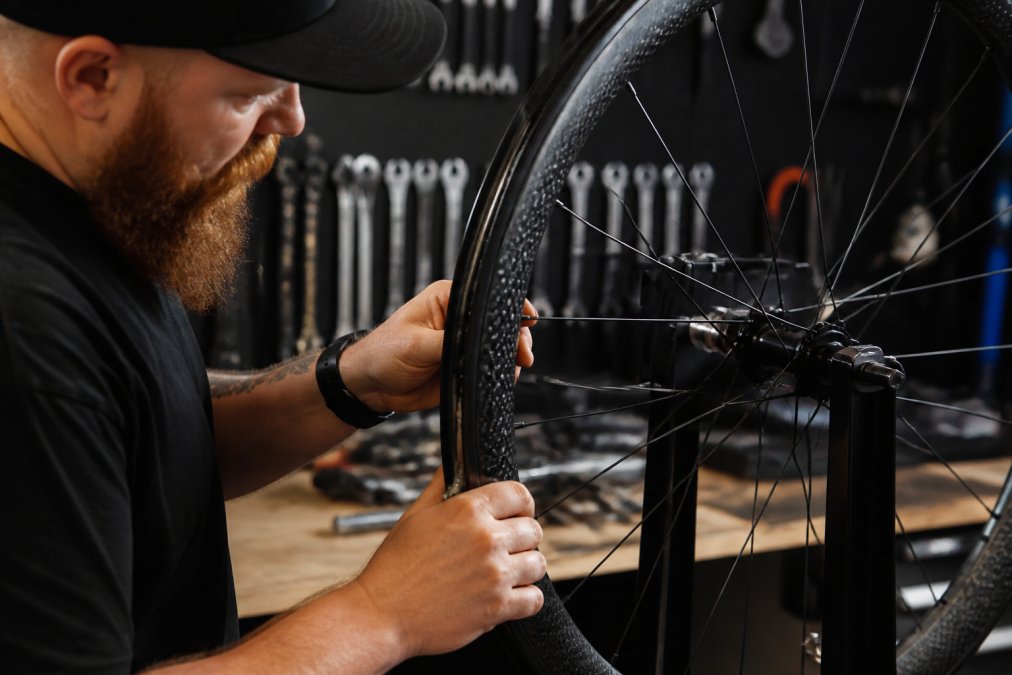
Hand-built wheels are fundamentally different from factory-produced wheelsets. Every spoke is individually tensioned and the wheel is repeatedly trued over days to allow spokes to settle. Factory wheels are mass-produced on automated machines that achieve acceptable tolerances but cannot account for material variations in carbon fibre or individual hub and rim geometry.
A hand-built wheel can be trued to 0.1mm lateral and radial runout, whereas factory wheels typically achieve 0.3-0.5mm (peer-reviewed research). That precision translates directly to longevity: wheels with tighter tolerances experience more uniform spoke tension distribution, reducing fatigue and extending lifespan. Hand-built approaches also allow customisation that factory options cannot offer. Your weight, riding style, terrain preference, and bike geometry can influence how a wheel should be built. With a hand-built wheel from a builder, you have a direct relationship with the person who built it. If something goes wrong, you're speaking to the builder who can assess the issue and often repair it directly. The Core Gravel 35 comes with a 3-year manufacturing warranty and crash replacement at 40% of RRP, reflecting the builder's confidence and commitment to long-term support.
Carbon vs Steel Spokes for Gravel: Which Performs Better
Steel spokes are the traditional baseline: durable, affordable, and proven. However, steel transmits vibration directly to the rim, making for a harsher ride on rough terrain.
Carbon spokes offer 20-30% weight savings and some vibration damping, but carbon has less elasticity than steel, making the wheel stiffer and transmitting more vibration.
Advanced polymer spokes like Berd and TiFi represent a significant leap forward. Berd spokes, made from Dyneema, are the lightest at around 1.5g per spoke, offer exceptional vibration damping (roughly 200% better than steel), and are impervious to corrosion (peer-reviewed research). The trade-off is cost and the need for experienced builders, as Berd spokes have lower maximum tension limits (around 100kgf) compared to steel (120kgf).
TiFi polymer spokes combine titanium at the spoke ends with aramid fibre along the shaft. At 2.2g per spoke, they offer 52% more elasticity than steel and 110% more than carbon. This elasticity allows the rim to deform independently of the hub, improving compliance. In real-world testing on gravel terrain, TiFi spokes reduce vibration by approximately 15% compared to steel and 29% compared to carbon (peer-reviewed research).

For gravel racing, choice depends on priorities. If weight is paramount, carbon spokes offer a good compromise. If comfort matters as much as speed on rough terrain, TiFi or Berd polymer spokes deliver measurably better performance.
Durable Carbon Gravel Wheelset for Racing: Top Alternatives
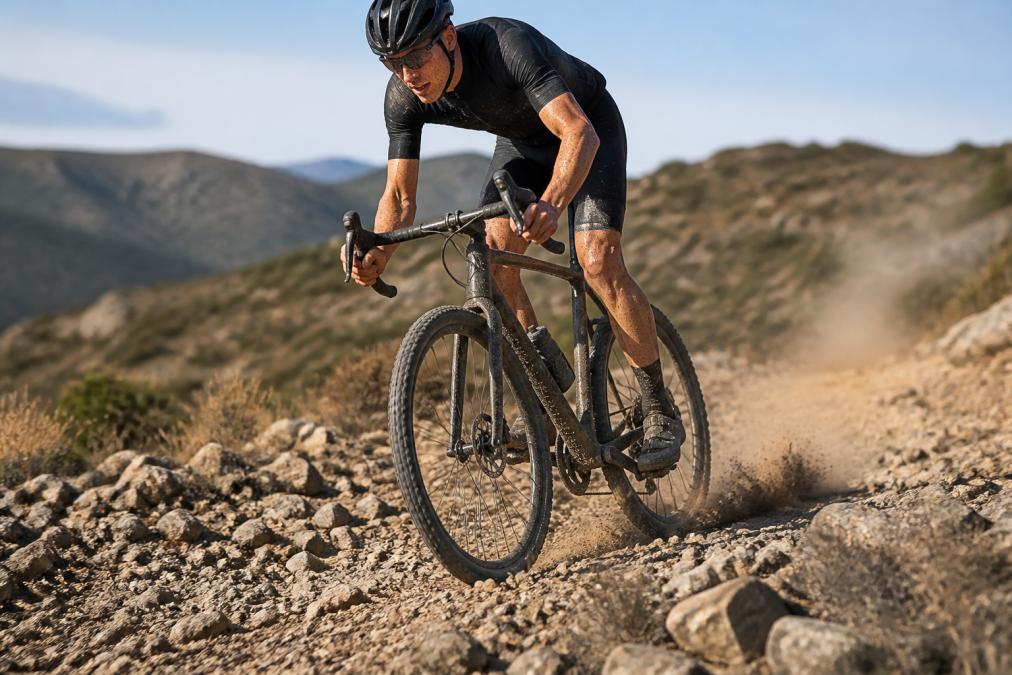
When building a wheelset specifically for gravel racing, durability and weight matter equally. A light wheel that fails mid-race is worthless. The alternatives below represent the best options for different racing priorities.
Berd Spoked Asymmetric 46: Balanced Spoke Tension for Aggressive Terrain
The Berd Spoked Asymmetric 46 is purpose-built for riders prioritising durability and comfort without sacrificing speed. At 1,260 grams, the weight distribution and material choice make it feel faster than the numbers suggest.
The asymmetric rim profile is the standout feature. By adjusting the rim's internal structure to balance spoke tension between drive and non-drive sides, this design reduces the tension difference from a typical 40% variance to a more even distribution. For Berd spokes with a maximum tension of 100kgf, this balance is critical. It allows the builder to tension the non-drive side to around 70kgf instead of 50kgf, resulting in a significantly more durable wheel under repeated impacts.
Berd spokes are made from Dyneema, impervious to corrosion and providing exceptional vibration damping. On gravel terrain, this translates to a noticeably smoother ride compared to steel or carbon alternatives. At $2,950, this wheelset is premium-priced but justified for riders doing multiple gravel races per season or long bikepacking trips. Lead time is approximately 3 weeks.
TiFi Polymer Spoked Gravel 45: Vibration Damping and Comfort
The TiFi Polymer Spoked Gravel 45 delivers measurable vibration reduction without the weight penalty of Berd spokes. At 1,190 grams, it's 70 grams lighter while maintaining exceptional ride quality.
TiFi spokes are engineered for comfort and speed. Titanium ends provide strength to handle spoke tension, while the aramid fibre shaft offers elasticity allowing the rim to deform independently of the hub. In controlled testing, TiFi spokes reduced vibrations by 15% compared to steel and 29% compared to carbon. At $2,990, this wheelset costs slightly more than the Berd option but delivers weight savings and faster engagement characteristics. The 45mm rim depth provides good aerodynamic profile, and the 32mm internal width accommodates gravel tyres from 35-50mm comfortably.
TiFi Polymer Spoked Gravel Max: Aerodynamic Width for Speed
For gravel racing on smoother terrain where aerodynamic advantage matters, the TiFi Polymer Spoked Gravel Max is the option to consider. With a 54mm deep front rim and 50mm deep rear rim, paired with 44mm and 37mm external widths respectively, this wheelset is genuinely aerodynamic for a gravel wheel. At 1,190 grams, it matches the standard TiFi Gravel 45 in weight but sacrifices some compliance for speed. Priced at $3,290, it's best for competitive racers prioritising speed over comfort.
45 FWT Wide Carbon Spoked: Lightweight and Stiff
The 45 FWT Wide Carbon Spoked wheelset offers traditional carbon spokes paired with a wide, aerodynamic rim profile. At 1,160 grams, it's the lightest option and delivers excellent stiffness for power transfer. The rim is manufactured by Filament Wound Technologies (FWT), ensuring consistent quality. The 45mm depth provides aerodynamic benefit, and the 25mm internal hooked rim width is designed for 34-35mm tyres. At $2,600, this wheelset is competitively priced and offers excellent value for racers prioritising weight and stiffness.
Core Gravel 35: Performance Without Premium Pricing
The Core Gravel 35 represents the entry point to hand-built carbon wheelsets without compromising core performance. By using round spokes instead of bladed alternatives and straight-pull hubs instead of flanged designs, STOXbyHand reduces cost without sacrificing precision and durability.
At 1,440 grams, the weight is distributed in ways that don't significantly impact performance. The 35mm rim depth is practical for gravel racing, offering modest aerodynamic benefit. The asymmetric rim profile with 2.8mm spoke offset ensures balanced spoke tension, and the 26mm internal hookless width accommodates standard gravel tyres.
The Core Hubs use a Planet Gear (PG) system with either 36 or 54 teeth, providing a choice between smooth engagement and fast response. Precision is identical to premium STOXbyHand builds: axles are hard-anodized and ground to within 0.003mm tolerance, and wheels are trued to 0.1mm lateral and radial runout. The 3-year manufacturing warranty and crash replacement at 40% RRP reflect the builder's confidence. It's best for riders new to hand-built wheels, those on a budget, or anyone racing gravel events where durability matters more than maximum speed.
| Wheelset | Weight | Best For | Key Advantage | Price |
|---|---|---|---|---|
| Berd Asymmetric 46 | 1,260g | Rough terrain, comfort | Balanced spoke tension, vibration damping | $2,950 |
| TiFi Gravel 45 | 1,190g | Mixed terrain racing | Elasticity, smooth ride | $2,990 |
| TiFi Gravel Max | 1,190g | Speed-focused racing | Aerodynamic depth | $3,290 |
| 45 FWT Carbon | 1,160g | Lightweight racing | Stiffness, affordability | $2,600 |
| Core Gravel 35 | 1,440g | Budget-conscious riders | Value, durability | Contact for pricing |
Warranty, Durability, and Long-Term Serviceability
The difference between a good wheelset and a great one often emerges years after purchase, when you need a spoke replaced or bearings serviced. This is where hand-built wheels from builders like STOXbyHand separate themselves from factory alternatives.
Most factory wheelsets come with 1-2 year warranties. STOXbyHand wheelsets offer 3-year warranties on manufacturing defects, with crash replacement options at 40-60% of RRP depending on the model. This extended coverage reflects the builder's confidence and commitment to supporting the wheel throughout its lifespan.
With a hand-built wheel, you can have spokes replaced, bearings serviced, or the wheel re-trued by the original builder. Hand-built wheels, properly maintained, can last 8-10 years or more, whereas factory wheels might last 3-5 years before bearings wear or spokes break. The initial investment is higher, but the cost per year of use often favours the hand-built option.
Choosing a hunt bike wheels alternative means committing to a wheelset built with precision, material science, and your specific riding needs in mind. The options outlined above, from the Berd Spoked Asymmetric 46 for maximum durability to the Core Gravel 35 for value-conscious riders, represent the best available alternatives for gravel racing and endurance cycling. Each is hand-built by STOXbyHand with meticulous attention to spoke tension, rim truing, and component selection. When you're ready to upgrade, consider not just weight and aerodynamics, but the durability, serviceability, and long-term value that a truly hand-built wheelset delivers. Get started with STOXbyHand and experience the difference that precision hand-building and advanced spoke materials make to your gravel racing performance.
Frequently Asked Questions
What makes hand-built carbon wheelsets better than factory-made Hunt alternatives?
Hand-built wheels offer precision trueing to 0.1 mm tolerances and uniform spoke tension, which factory production rarely matches. Each wheel is individually laced, trued, and re-tensioned daily to remove pre-stretch from advanced polymer or carbon spokes. This process takes time but delivers wheels that stay true longer and handle rough terrain more reliably. Hunt wheels are mass-produced, which means tolerances are wider and spoke tension may vary between wheels.
Are TiFi polymer spokes worth the extra cost compared to carbon or steel?
TiFi spokes weigh just 2.2g each and offer 52% more elasticity than steel and 110% more than carbon. In real-world testing, they reduce vibrations by around 29% compared to carbon-spoked wheels. This translates to a smoother, more comfortable ride on rough gravel without sacrificing stiffness. For endurance racers and riders tackling 50+ mile gravel events, the vibration damping and comfort justify the premium. Berd spokes offer similar benefits at a different price point.
What warranty and crash replacement coverage do hand-built alternatives offer?
STOXbyHand wheelsets include a 3-year warranty on manufacturing defects. Crash replacement policies vary: the Core Gravel 35 offers 40% off RRP, the 45 FWT Wide Carbon offers 60% off RRP, and the Berd Spoked Asymmetric offers similar coverage. This is typically better than Hunt's standard warranty and reflects confidence in hand-built construction. Always confirm crash replacement terms when purchasing, as this protection is valuable for racing and aggressive terrain use.
How do rim depth and width affect gravel wheelset performance?
Rim depth controls aerodynamic drag and rotational mass. Deeper rims (45-54 mm) reduce drag at speed but add weight; shallower rims (35 mm) are lighter and better for climbing. Rim width determines tyre compatibility and aerodynamic efficiency. A 25-32 mm internal width suits 40-50 mm tyres common in gravel racing. Asymmetric rims, like those in the Berd Spoked Asymmetric 46, balance spoke tension between drive and non-drive sides, improving durability and longevity under load.
Can hand-built wheels handle the same weight and torque as Hunt wheels?
Yes. Hand-built carbon wheels are engineered for specific rider weights and use cases. The Berd Spoked Asymmetric supports up to 110 kg system weight, the TiFi Polymer Gravel 45 supports 105 kg, and the 45 FWT supports 110 kg. The asymmetric rim design and sealed cartridge bearings distribute forces evenly, making these wheels durable for aggressive gravel racing and rough terrain. Proper maintenance, checking spoke tension and bearing drag regularly, extends their lifespan significantly.