

Table of Contents
- Why Buy a Custom Carbon Wheelset Online?
- Hand Built vs Factory Wheelsets: What's the Real Difference?
- Choosing Rim Depth for Road Cycling Performance
- The Benefits of Carbon Fibre Spokes and Alternatives
- How to Buy a Custom Carbon Wheelset Online: The Process
- Which Custom Wheelset Should You Pick?
- Final Thoughts on Your Custom Build
- Frequently Asked Questions
Last Updated: September 4, 2026
Why Buy a Custom Carbon Wheelset Online?
A custom carbon wheelset is built to your exact specifications, combining a specific rim profile with chosen hubs, spokes, and lacing patterns. The reason to buy one online comes down to fit, not for your bike frame, but for your body weight, riding style, and terrain.
At STOXbyHand, we have spent over 12 years hand-building carbon wheels, and the most common question is whether a custom build is worth it. The answer is yes, but only when the builder understands how each component interacts. A wheelset tuned for a 58 kg climber will feel dangerously soft under a 95 kg sprinter (sheldonbrown.com). Buying online removes geographic limits and gives you access to specialist builders who tailor spoke counts, hub engagement, and rim width to your numbers.
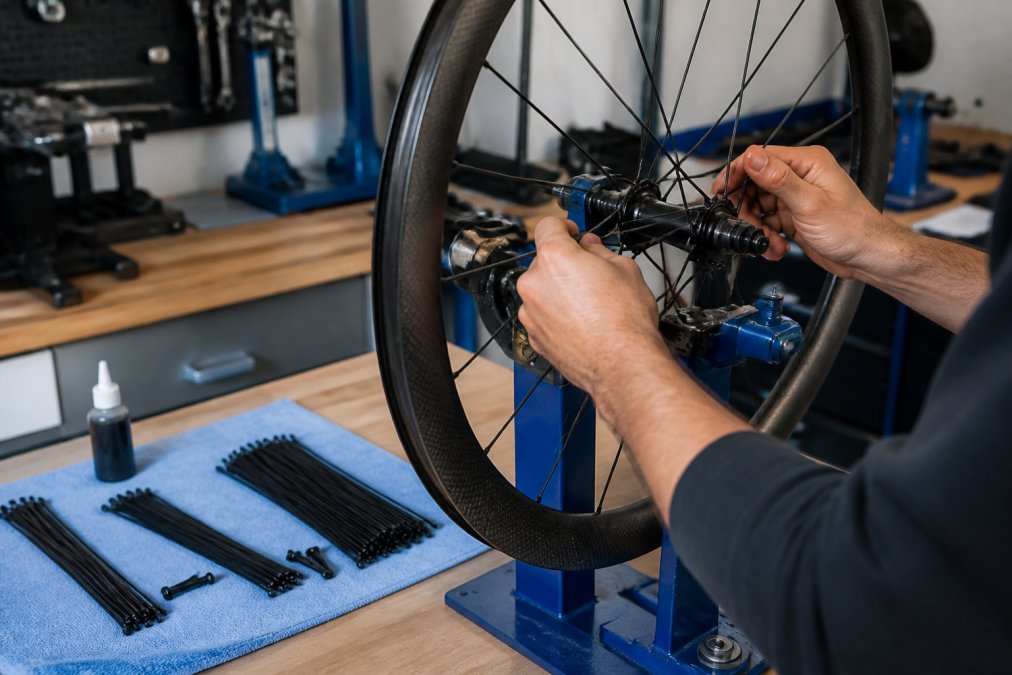
The real advantage is that you pay for performance where it matters to you. Factory wheelsets are engineered for the average rider; a custom wheelset is engineered for one rider. Below, we show you how to specify, order, and receive a wheelset that matches your riding.
Hand Built vs Factory Wheelsets: What's the Real Difference?
The difference between hand built vs factory wheelsets is quality control and material selection. Factory wheelsets are assembled by machines or low-cost labour using standardised components, which keeps prices down but introduces tolerances that can compromise spoke tension and bearing alignment. Hand-built wheels are assembled by a single builder who measures, tensions, and trues each wheel, producing a more durable and serviceable result.
A common mistake is assuming hand-built simply means assembled by a person. True hand building involves selecting components that work together, like matching rim internal width to your tyre size and choosing a hub flange that suits your riding weight. The builder also manages spoke tension balance between the drive and disc sides of the rear wheel, which directly affects how long the wheel stays true.
The trade-off is cost and lead time. Factory wheels are cheaper and available immediately, but harder to service when spokes break or rims go out of true. Hand-built wheels cost more upfront but can be repaired by any competent wheel builder rather than replaced entirely. For riders logging serious kilometres, the serviceability advantage typically outweighs the initial saving.
Choosing Rim Depth for Road Cycling Performance
Choosing rim depth for road cycling is a trade-off between aerodynamics and crosswind stability. Deep rims from 45 mm to 65 mm reduce drag at higher speeds and are standard for racing and time trials, but they catch wind more in gusty conditions. Shallower rims below 40 mm handle better in crosswinds and climb with less perceived inertia, but give up the watt savings of deep sections.
Rim depth is not the only number that matters. Internal rim width controls how your tyre profile sits. A modern wide rim with a 25 mm internal width allows a 28 mm or 32 mm tyre to balloon into a more aerodynamic shape while running lower pressure for comfort. The trend toward wider tyres and lower pressures has made internal width as important as depth for most road riders.
For most Australian road riders, a 45 mm to 50 mm depth is the practical sweet spot. It delivers meaningful aerodynamic benefit without the white-knuckle handling of a 65 mm section in gusty coastal winds. Our [45 FWT Wide(/products/carbon-spoked-45w) Carbon Spoked GWR | stoxbyhand.com] wheelset pairs a 45 mm filament-wound rim with a 25 mm internal hooked width, giving you an aero wide rim and tyre combination that suits both fast group rides and long solo efforts.
| Rider Profile | Recommended Depth | Internal Width | Best Use |
|---|---|---|---|
| Climber under 70 kg | 35-40 mm | 21-23 mm | Steep climbs, hilly courses |
| All-round road rider | 45-50 mm | 23-25 mm | Group rides, sportives, racing |
| Time trial / triathlon | 60-65 mm | 21-23 mm | Flat, non-technical courses |
| Gravel / rough road | 40-45 mm | 25-27 mm | Mixed terrain, endurance events |
The Benefits of Carbon Fibre Spokes and Alternatives
The benefits of carbon fibre spokes are stiffness and weight reduction, but they are not right for every rider. Carbon spokes transfer power directly with minimal flex, making the wheel feel immediate under hard acceleration. They also save significant rotational weight, improving climbing and acceleration more than saving the same weight from the frame.
Carbon spokes have a downside: they transmit road buzz more harshly than metal or polymer options, and offer no give when you hit a pothole. Berd spokes are made from a woven polymer that absorbs vibration while remaining light, and TiFi polymer spokes claim to be the lightest in the world at 2.2 grams each while adding comfort.

The choice comes down to your priority. If you are a racer chasing every watt on smooth roads, carbon spokes deliver the stiffness you want. If you are a gravel rider covering 50+ mile events on rough terrain, the vibration damping of polymer spokes will keep you fresher over the distance.
What the Sales Pages Don't Tell You About Spoke Materials
Most online listings stop at stiffness and weight, but real differences emerge over thousands of kilometres. Carbon spokes are typically bonded or threaded into the rim and hub. If one snaps, you cannot simply replace it with a standard metal spoke, the rim's spoke bed and hub flange are often drilled to a specific diameter, and the tensioning method differs. This means a carbon-spoked wheelset usually needs to go back to the original builder for repair.
Polymer spokes like Berd and TiFi are lighter than steel but stretch more under load. That stretch gives comfort, but also means the wheel needs re-tensioning more frequently than a metal-spoked build. A Berd-spoked wheel hammered on rough gravel for a season will often show a few millimetres of lateral runout that a simple truing stand adjustment can fix, provided the builder understands polymer spoke tensioning.
Rider Weight and Spoke Count: The Missing Logic
Spoke material choice interacts directly with rider weight. For a rider under 75 kg, a 24-spoke carbon build on smooth roads is stiff and reliable. For a rider over 90 kg, that same build will feel harsh and may develop stress fractures at the nipple interface over time. Carbon spokes do not yield, so every impact force travels straight into the rim bed and hub flange.
For heavier riders or those carrying touring loads, a 28- or 32-spoke build with stainless steel spokes (such as Sapim CX-Ray or DT Swiss Aerolite) remains the most serviceable and durable option. These spokes are bladed for aerodynamics but retain elasticity to absorb impacts. The weight penalty is roughly 150 to 200 grams per wheelset compared to carbon spokes, a trade-off most endurance riders accept.
Serviceability: What Happens When a Spoke Breaks?
A steel-spoked wheel can be repaired by any competent wheel builder in under an hour. A carbon-spoked wheel requires proprietary parts and often factory tooling. A polymer-spoked wheel sits in between: Berd spokes are replaceable with a simple tool, but you need the correct spare spoke and tension spec. Before ordering, ask the builder: "If I break a spoke in a remote area, can a local shop fix it, or does the wheel need to come back to you?"
For most Australian conditions, long climbs, chip-sealed descents, and gusty coastal winds, a 28-spoke steel build with quality hubs is often the smarter investment than an exotic carbon-spoked wheelset that saves 200 grams but complicates every future repair.
How to Buy a Custom Carbon Wheelset Online: The Process
Buying a custom wheelset online is straightforward when you know the process, but it requires accurate information from you.
What You'll Need Before You Order
Before you start, gather your bike specifications. You need your frame's axle standard (quick release or thru-axle) and hub spacing for front and rear. Most modern road and gravel bikes use thru-axles, but older frames may still use quick release. You also need your brake type (disc or rim) and whether your disc rotors use center lock or 6-bolt mounting.
Your body weight and typical riding style are equally important. The builder uses this to determine spoke count and tension. A heavier rider or one carrying loaded panniers needs more spokes and higher tension to stay true. You should also know your preferred tyre size, as this dictates the rim's internal width.
The 4-Step Ordering Process Explained
The process follows four clear steps.
- Choose your rim profile and depth based on your riding terrain and goals.
- Select your spoke type: carbon fibre for stiffness, or Berd or TiFi polymer for comfort.
- Specify your hub standard, axle type, brake rotor mount, and cassette compatibility.
- Provide your body weight and typical terrain so the builder can set spoke tension correctly.
You do not need to send your bike in. A reputable builder can work from your specifications alone and will confirm the details before starting the build.
Which Custom Wheelset Should You Pick?
The best custom wheelset for you depends on your riding discipline and weight. For road riders chasing speed on smooth surfaces, the Wave CS 4565 Carbon Spoked Wheelset is our fastest option, designed with a 24-spoke carbon count to transfer every watt into forward momentum without lateral flex. It suits riders who can throw watt bombs and want a stiff, versatile wheelset.
For gravel riders who want a balance of speed and comfort, the TiFi Polymer Spoked Gravel 45 uses the world's lightest spokes to string together comfort and speed. At 2.2 grams per spoke, this build reduces rotational weight while the polymer material absorbs vibration from rough terrain.
For aggressive gravel riding where spoke tension balance matters, the Berd Spoked Asymmetric 46 Gravel Wheelset uses an asymmetric rim profile to even out the spoke tensions between the drive and disc sides of the rear wheel. This design addresses the inherent imbalance of disc brake wheels and produces a stronger, more durable build.
| Wheelset | Spoke Type | Weight | Best For | Price |
|---|---|---|---|---|
| Wave CS 4565 | Carbon | Not specified | Fast road riding, racing | $2,200.00 |
| 45 FWT Wide GWR | Carbon | 1160 g | Aero road and gravel | $2,600.00 |
| Berd Asymmetric 46 | Berd polymer | 1260 g | Aggressive gravel | $2,950.00 |
| TiFi Polymer 45 | TiFi polymer | Lightest option | Gravel comfort and speed | $2,990.00 |
Final Thoughts on Your Custom Build
The decision to buy a custom carbon wheelset online comes down to whether you want a product engineered for averages or one engineered for you. Factory wheels serve many riders well, but they cannot account for your specific weight, terrain, and performance goals. A hand-built wheelset from a specialist builder addresses those variables directly.

What most guides miss is the importance of long-term serviceability. A custom build from an experienced builder can be re-tensioned, re-laced, and repaired as components wear, extending the wheelset's life well beyond a disposable factory alternative. Ask about crash replacement policies and warranty coverage before you order, because carbon rims do fail and you want to know the path to a replacement is clear.
The Maintenance Schedule Most Buyers Never See
Carbon wheels are not fit-and-forget components. A realistic maintenance schedule for a wheelset ridden 8,000 to 12,000 kilometres per year looks like this:
- Every 500 km: Check tyre pressure and inspect the rim bed for debris or damage after tubeless tyre removal.
- Every 2,000 km: Check spoke tension with a tension meter. A well-built wheel should not lose tension, but if you hear pinging sounds on rough roads, it is time to check.
- Every 5,000 km: Service the hubs. This means cleaning and re-greasing the bearings, checking for play, and replacing them if they feel gritty. Quality hubs from DT Swiss, Chris King, or Industry Nine use standard bearings that cost $15 to $40 each (universalcycles.com).
- Every 10,000 km or after a major impact: Have the wheel trued and the tension balanced by a professional. This costs $60 to $120 at a reputable shop and will extend the life of the rim significantly.
A common pattern among riders who complain about premature carbon rim failure is that they never serviced the hubs. A worn bearing allows the axle to move laterally, putting uneven load on the spokes and eventually cracking the rim bed near the nipple. Hub maintenance is cheaper than rim replacement and entirely within your control.
Crash Replacement Policies: The Question That Saves You $1,500
Carbon rims are strong but not indestructible. A hard hit on a pothole or a crash at speed can crack a rim. The difference between a $300 repair and a $1,500 replacement often comes down to the policy you confirmed before ordering.
Ask every builder these four questions before you commit:
- What is the warranty period for manufacturing defects? Most reputable builders offer 2 to 5 years against defects in materials or workmanship.
- What does the crash replacement policy actually cover? Some builders offer 30-50% off a replacement rim for the original owner. Others require you to ship the damaged wheel back for inspection before they honour anything.
- Is the policy transferable if you sell the wheelset? Most are not. If you plan to sell, factor that into the resale value.
- What is the turnaround time for a replacement rim? If you are a competitive rider, a six-week wait mid-season is a problem. Ask if they keep spare rims in stock for popular models.
A builder who cannot answer these questions clearly is not offering the after-sales support that justifies the premium of a custom build. A builder who documents their policy in writing is signalling that they expect the wheelset to last long enough for you to need it.
The Real Cost of Ownership
A $2,600 custom wheelset ridden for 10,000 kilometres per year over three years costs roughly $0.09 per kilometre. Add two hub services at $80 each, one full truing at $100, and one set of replacement bearings at $60, and the total cost rises to approximately $0.10 per kilometre. Compare that to a $1,200 factory wheelset that needs replacement after two years because the rim is no longer true and the hubs cannot be serviced, that works out to $0.06 per kilometre, but you are riding on a compromised wheel for the second half of its life.
The value of a custom build is not just the initial performance. It is the knowledge that when something wears out, you can replace a $40 bearing rather than a $1,500 wheelset. That is the real reason to buy custom, and it is the question most online guides never answer.
Frequently Asked Questions
What are the benefits of hand-built carbon wheels over factory sets?
Hand-built wheels receive individual attention during the build process. A builder checks spoke tension, trueness, and dish by hand, which often results in a more durable and reliable wheel. Factory wheels are machine-built for speed, which can lead to inconsistent spoke tension and a shorter lifespan. With a hand-built custom carbon wheelset, you also get specific component choices, like hub and spoke options, tailored to your weight and riding style.
How do I choose the right rim depth for my riding style?
For flat and rolling terrain, a deeper rim (50-65mm) offers significant aerodynamic benefits. For hilly courses or strong crosswinds, a shallower rim (30-45mm) is lighter and easier to control. If you are a road cyclist who climbs often, consider a shallower front rim for handling. Gravel riders should prioritise internal width for tyre clearance over pure aero gains, often choosing a 25mm internal hooked rim.
Are carbon fibre spokes worth the upgrade?
Carbon fibre spokes offer a unique combination of stiffness and weight savings, often creating one of the lightest wheelsets available. They excel at transferring power directly to forward momentum. However, they provide a stiffer ride feel. If you prioritise comfort over long distances, polymer spokes like Berd or TiFi absorb more road vibration while still saving significant weight, offering a different performance benefit.
What should I look for when buying custom wheels online?
Look for a builder with transparent specifications and experience. Check that they offer a warranty and crash replacement policy. You should be able to specify your weight, riding style, and bike type (road, gravel, or mountain). Ensure they use quality components like reliable hubs and proper spoke nipples, and ask about their support process in case you need servicing or repairs after purchase.
Choosing the right wheelset is a challenge of matching components to your riding, not just picking the lightest option. STOXbyHand has spent over 12 years hand-building carbon wheels with specialised spoke options including carbon fibre, Berd, and TiFi polymer, so we can tailor a build to your exact weight and terrain. Get started with STOXbyHand and order a wheelset that performs for your riding style, backed by builders who stand behind their work.